
Last updated November 21, 2026
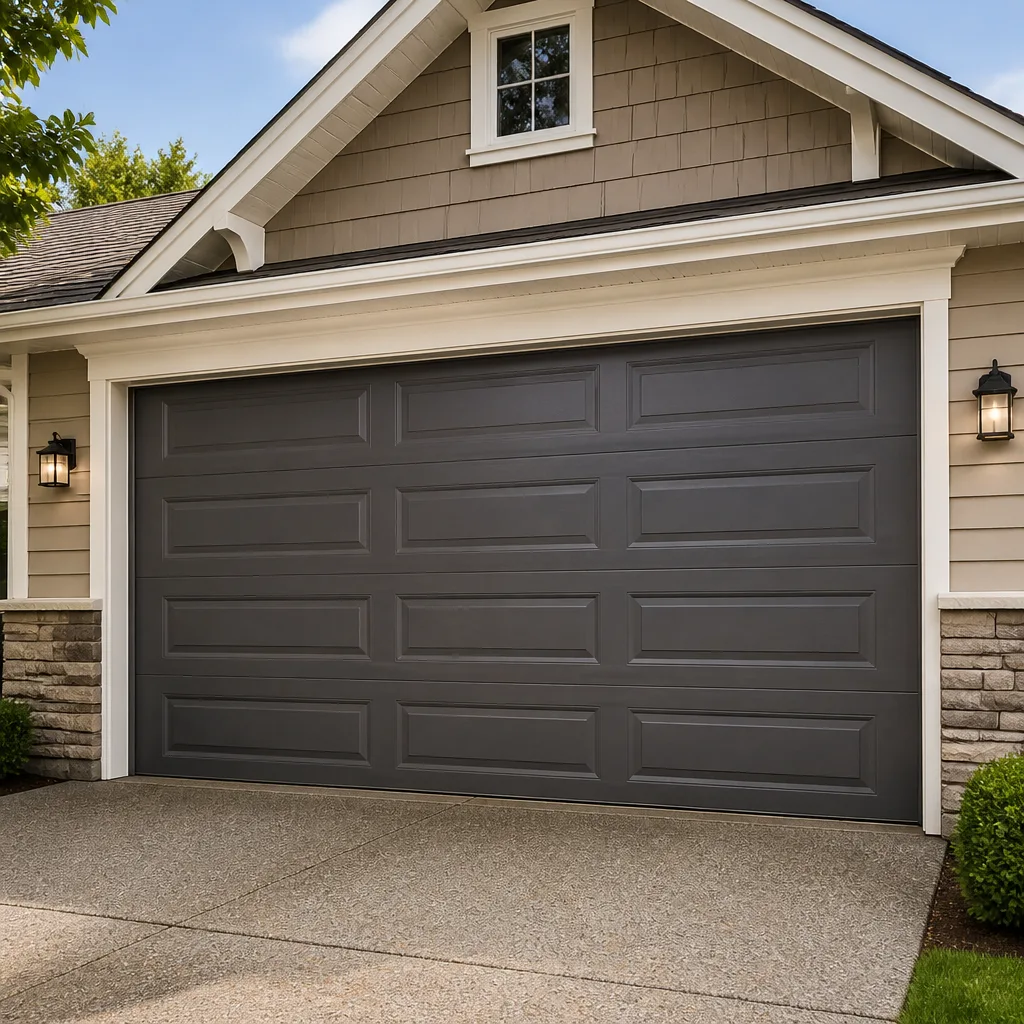 Raised-panel steel
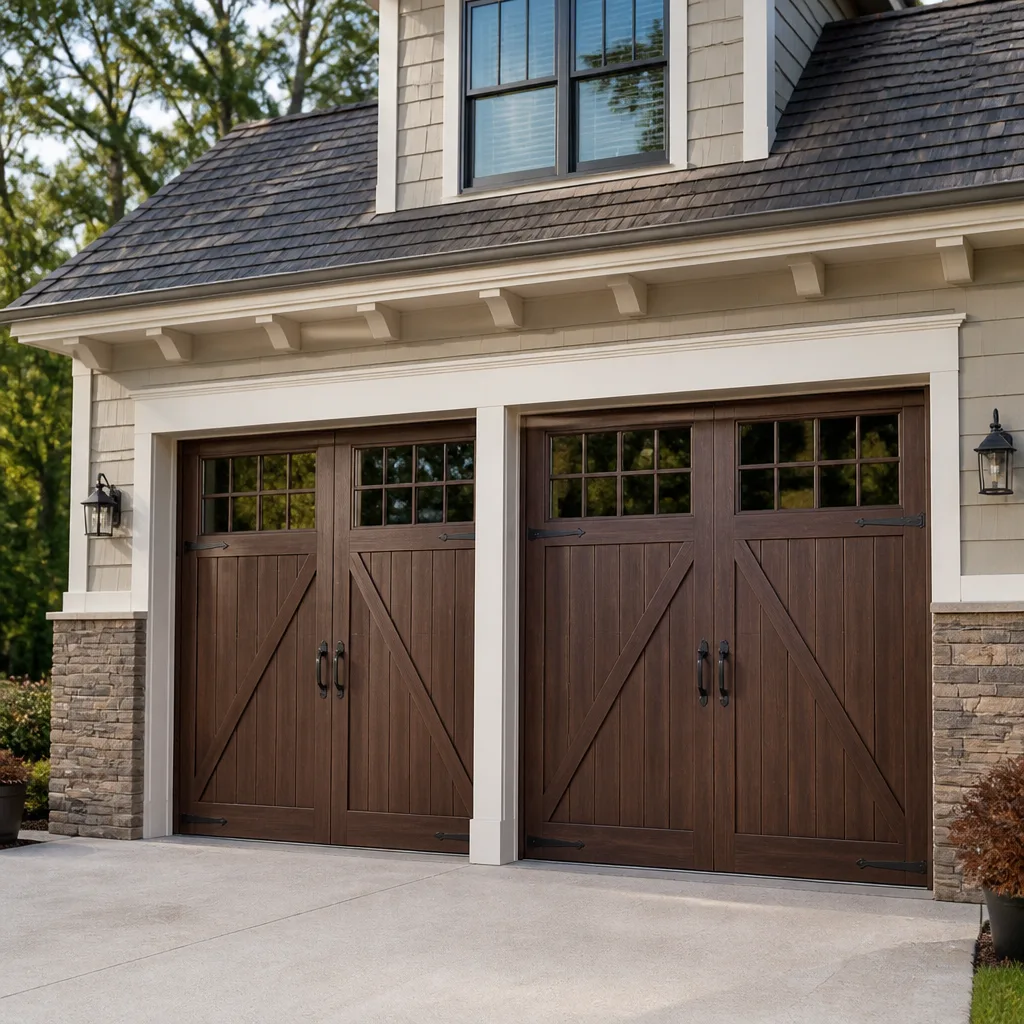 Carriage house
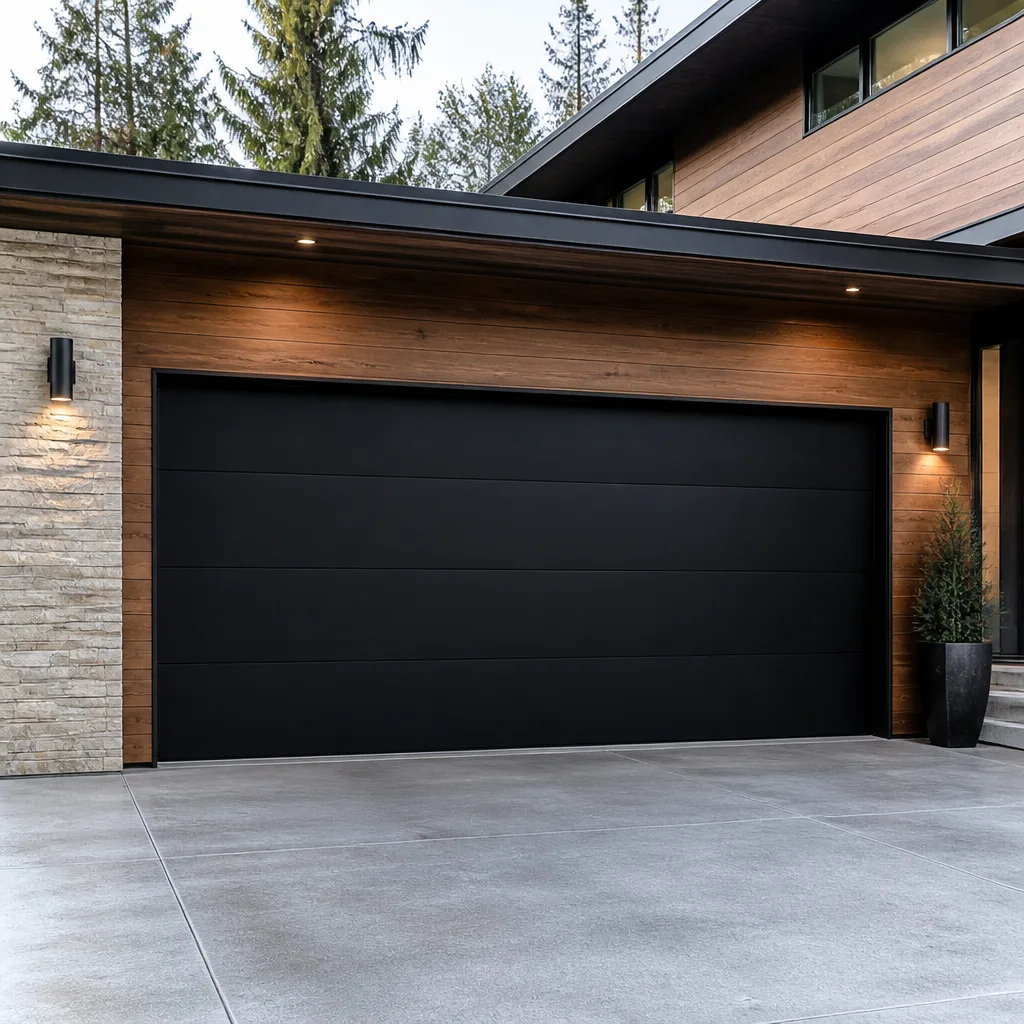 Modern flush
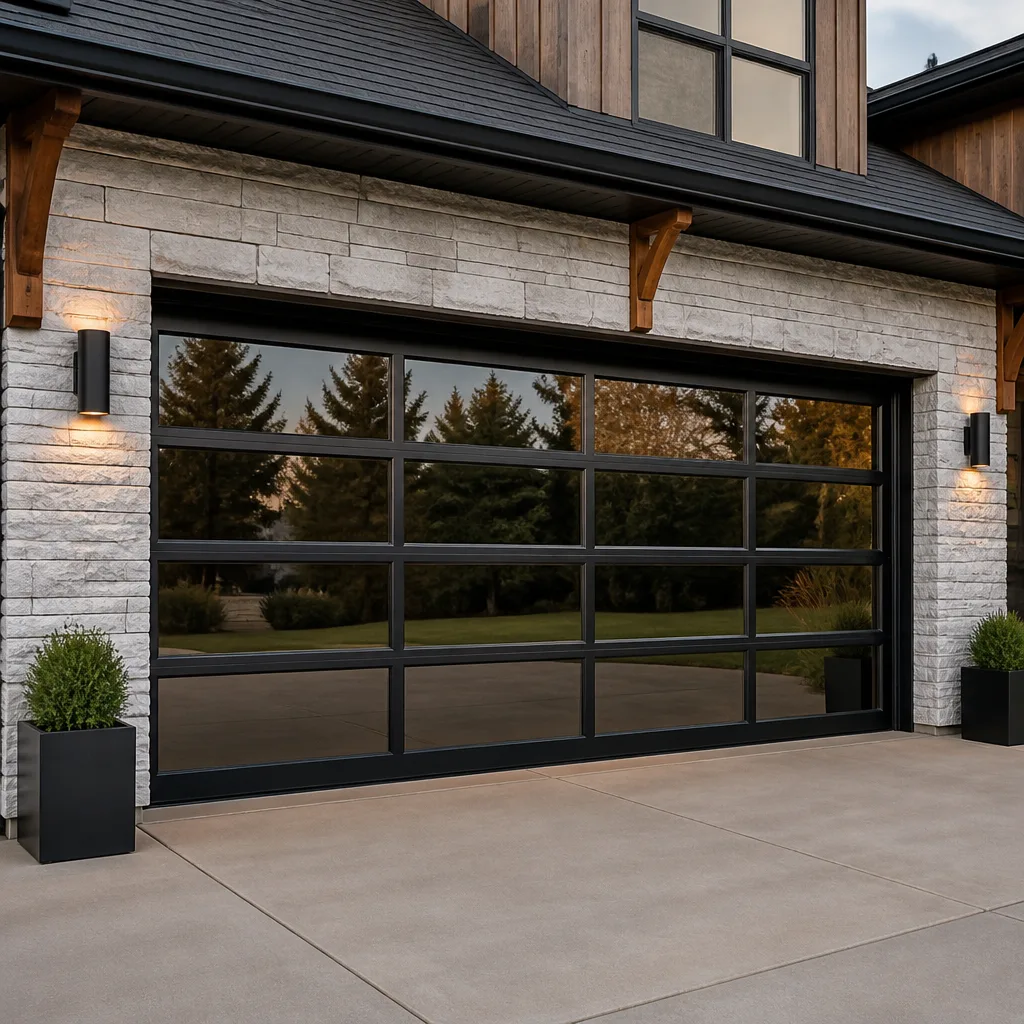 Full-view glass
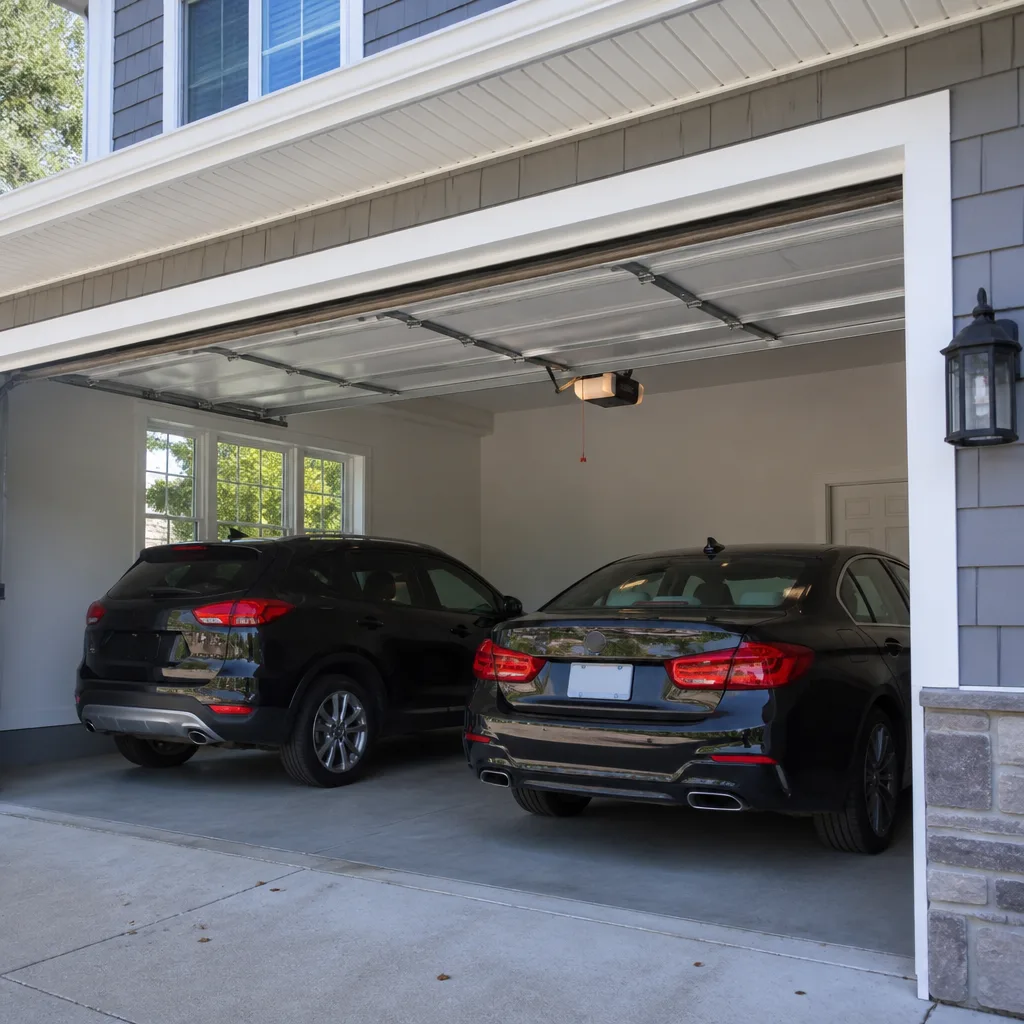 LiftMaster openers
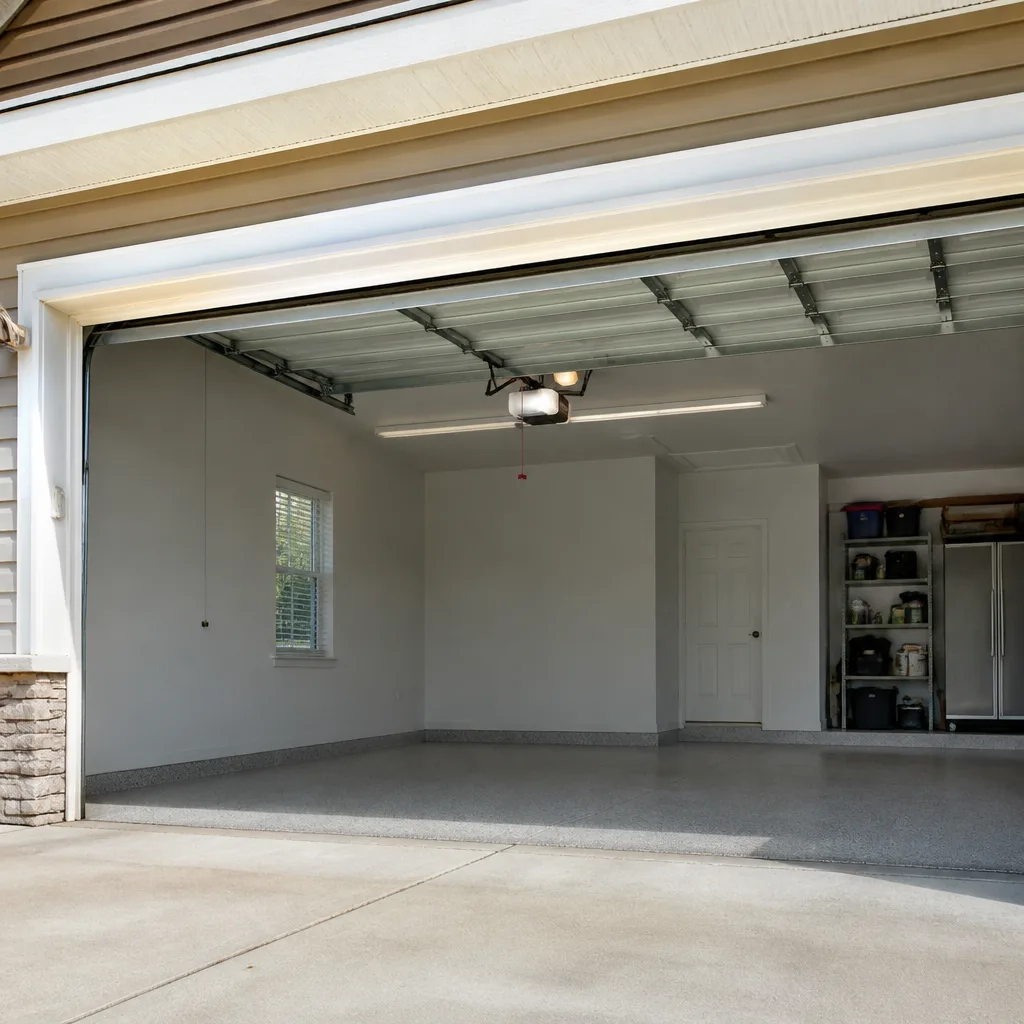 Chamberlain openers
Full 25-point door and opener safety check with every visit - springs, cables, rollers, tracks, and your LiftMaster or Chamberlain opener included
You get a price before we start. It does not change when the pro arrives.
Get your free estimateThe Complete Guide to Garage Doors in Poinciana
Two houses on the same Poinciana street can need completely different repairs on the same day. One was built in the early 2000s with a builder-grade door running on original springs; the other went up recently in Solivita with a modern insulated door and a Wi-Fi-connected opener. Same sun, same afternoon storms, entirely different failure modes, parts availability and repair costs. That gap is what this guide closes. By the end, you’ll know how to identify what you actually have, how Poinciana’s climate treats it, and whether the next breakdown is a repair or a replacement signal.
Quick Answer
The right approach to a garage door in Poinciana starts with identifying it: read the label plate on the door and opener, note the material, and check the spring system before you call anyone. Builder-grade doors common in Poinciana subdivisions usually make sense to repair until the third or fourth major fix, while upgrade-tier doors (Clopay, Amarr, Wayne Dalton and Raynor) often reward continued maintenance. When repairs start clustering, replacement is the better money.
Styles & brands we work with
- Raised-panel steel
- Carriage house
- Modern flush
- Full-view glass
- LiftMaster openers
- Chamberlain openers
Table of Contents
- How Do You Identify Your Garage Door’s Age, Brand and Spring Type?
- How to Read Your Door’s Label Plate and What It Tells You
- Which Garage Door Materials Hold Up Against Poinciana’s Humidity and Storms?
- Builder-Grade vs. Upgrade-Tier Doors in Poinciana
- Spring Systems: The Part That Matters Most
- Openers in a Smart-Home Town: Legacy vs. Wi-Fi-Connected
- Repair History Patterns: When to Stop Patching and Start Replacing
- Poinciana Climate and What It Does to a Garage Door
How Do You Identify Your Garage Door’s Age, Brand and Spring Type?
You identify a garage door in three places: a label plate on the door panel or end stile, a data sticker on the opener motor housing, and a visual check of the springs above the door. Knowing all three before you call anyone means the first conversation is about a fix, not a hunt. On a Poinciana street where housing spans from early-2000s tract homes to new construction, this quick inventory is genuinely worth ten minutes.
- Look for the door label. Most manufactured residential doors carry a sticker or plate on the inner face of a panel or the end stile. It usually names the manufacturer (Clopay, Amarr, Wayne Dalton, Raynor, for example) and a model or series number.
- Check the opener. The opener motor housing has a data plate with the brand (LiftMaster, Chamberlain, Genie, Craftsman) and model. This matters because opener parts are model-specific.
- Identify the spring type. Stand outside the closed door and look above it inside the garage. One long spring running left to right is a torsion system. Two springs running parallel to the tracks on either side are extension springs.
- Note the door material. Steel, aluminum, wood or composite. Tap the panel; a hollow resonance usually means a steel skin over a frame.
- Estimate the age. The door label often carries a date code, and the opener’s sticker almost always does. If neither is legible, the style and material point to an era.
Armed with those five facts, you can describe your door accurately and get a straight answer about what a repair involves. It also helps when the door is one of the rare models where parts are hard to source, so you know early.
How to Read Your Door’s Label Plate and What It Tells You
The label plate is the closest thing a garage door has to a birth certificate. It tells you the manufacturer, model, and often the date of manufacture, and that combination is what determines parts availability and realistic remaining life. Most homeowners never look at it until something breaks. Reading it first saves a step.
What the specs actually mean for you:
- Manufacturer and model number: the model number is what a technician needs to order the right hinges, rollers, struts or bottom seal. A Clopay door and an Amarr door of the same size don’t share hardware.
- Date of manufacture: gives you an honest age figure. A door dated to 2004 in a Poinciana subdivision has likely been through at least one spring replacement already.
- Panel thickness or gauge: thicker steel resists dents better. Thinner panels are more likely to have been dented by an errant bumper in a two-car driveway.
- Insulation value where listed: insulated doors hold up better against heat gain in an attached garage, which matters in central Florida summers.
- Wind-load or design-pressure rating where listed: some doors carry a rating; where the label doesn’t list one, don’t assume. If your area has specific wind requirements, ask your city’s building department what applies to your home.
If the label is worn or missing, a technician can usually identify the door from the hardware and panel profile. That’s part of what we do when we arrive.
Which Garage Door Materials Hold Up Against Poinciana’s Humidity and Storms?
In Poinciana, the two things that age a garage door fastest are humidity and the strong afternoon storm cycles that roll through central Florida in the warmer months. Material choice determines how gracefully a door handles both. Here’s how the main options compare in this climate.
- Steel: the most common material in Poinciana subdivisions. Durable and affordable, but the factory finish matters. Where the paint film is scratched or chipped, moisture gets under it and rust starts at the bottom panel first. Keep the bottom edge painted and it lasts well.
- Aluminum: rust-resistant and lighter, but dents more easily. Good for homeowners who want low maintenance and don’t mind a lighter panel.
- Wood: beautiful, but the highest-maintenance choice in a humid climate. It needs regular sealing and repainting to keep moisture from swelling and warping the panels.
- Composite and faux-wood: holds up better than real wood in humidity and needs less upkeep.
- Insulated steel: the practical middle ground. The insulation layer reduces heat transfer into the garage, and the panel is stiffer and quieter.
Storm cycles bring wind-driven rain and the occasional impact from debris. After a strong storm, check the door’s alignment and the condition of the bottom seal, since those are the first places damage shows. Hail is uncommon here, so most impact damage you’ll see is from wind-blown objects rather than hail.
Builder-Grade vs. Upgrade-Tier Doors in Poinciana
Builder-grade and upgrade-tier doors are built to different budgets, and that difference shows up in how often they need service and what they cost to keep running. Most Poinciana tract homes from the early 2000s went up with builder-grade doors: standard steel panels, basic hardware, and an entry-level opener. The newer builds in Solivita and elsewhere often include upgrade-tier doors from Clopay, Amarr, Wayne Dalton or Raynor, with better hardware and sometimes a smart opener.
How to tell them apart:
- Hardware quality: builder-grade doors often use lighter-gauge hinges, thinner rollers and simpler brackets. Upgrade doors use heavier hardware that lasts longer between services.
- Panel construction: upgrade doors typically have better steel, sometimes insulated cores, and more consistent finishes.
- Opener tier: builder-grade homes often still have the original chain-drive opener. Upgrade homes may have a belt-drive or Wi-Fi-connected LiftMaster or Chamberlain unit.
- Parts availability: upgrade-tier doors from major brands almost always have parts available. Some builder-grade models have been discontinued, which can push a repair into a replacement earlier than the door’s actual condition would suggest.
The practical takeaway: a builder-grade door is often worth repairing for years, as long as the parts are still made. An upgrade-tier door is usually worth maintaining longer, because the underlying materials reward it. Either way, when a builder-grade model’s parts are gone, replacement is the honest answer.
Spring Systems: The Part That Matters Most
Garage door springs are the single most dangerous and most misunderstood part of the system, which is why spring work belongs to a trained technician. A torsion spring stores an enormous amount of energy. When it fails it can do so violently, and the hardware that holds it is under tension even when the door is closed. Do not attempt to adjust, remove or replace a spring yourself. If your door’s spring has snapped, keep the door closed if you can and call.
The two systems:
- Torsion springs mount horizontally above the door on a shaft. They lift more evenly and are common on newer and larger doors. When one breaks, the door usually won’t lift, or lifts only a little before jamming.
- Extension springs mount alongside the tracks. Older homes in Poinciana often still have them. When one lets go, the door slams down.
Two facts to know before you call for garage door spring repair:
- Springs are replaced as a matched pair. If one spring snapped, the other has taken the same load for the same years. Replacing both at once is standard practice, because a nearly identical second spring usually fails soon after. A pair carries roughly double the price of a single spring, so budget for two.
- Spring size is matched to the door’s weight. A replacement spring has to match the door, not just the old spring, especially if a previous owner used the wrong one.
Springs are the most common garage door failure, and the one where DIY is genuinely dangerous. This is the job to call in.
Openers in a Smart-Home Town: Legacy vs. Wi-Fi-Connected
Poinciana has a wide spread of opener generations, and the repair path depends entirely on which one you have. Legacy chain-drive units from Craftsman and Genie still run in plenty of early-2000s homes. Newer builds often have belt-drive or Wi-Fi-connected openers from LiftMaster and Chamberlain. Both are serviceable, but the parts and the diagnosis differ.
What typically fails, by generation:
- Legacy mechanical openers: gear assemblies wear, safety sensors drift, and remote controls stop syncing. These are usually repairable without replacement.
- Wi-Fi smart openers: connectivity issues, firmware or app problems, and sensor alignment. The good news is that the lift mechanism is usually fine; the fix is often in the electronics.
- Any opener: a slow or labored lift is more often the door’s balance and springs than the opener itself. It’s worth checking both before assuming the motor is the problem.
We service LiftMaster, Chamberlain, Genie and Craftsman openers and work on both legacy and connected systems, so a single visit can tell you whether the opener needs a part, a realignment or replacement. On opener work, garage door opener repair is often a same-day fix.
Repair History Patterns: When to Stop Patching and Start Replacing
A single repair is normal wear. A pattern of repairs is a signal. The pattern is what tells you the door is at the end of its useful life, not one bad day. Watch for these signs:
- Three or more significant repairs in roughly two years. Once repairs start clustering, the cost per year of ownership rises above what a new door costs to run.
- Repeated spring failures close together. Usually a sign the wrong springs were used or the door is out of balance.
- Two or more panel replacements on the same door. Panels get harder to match as models age, and mismatched panels mean a door that’s been patched together.
- Rust working through the bottom panel. In a humid Poinciana climate, bottom-panel rust often means the steel has been compromised where it counts.
- Opener replaced but the door still runs rough. This usually points to the door’s balance and springs, not the motor, and repeated fixes catch up with it.
- Parts no longer made. If the manufacturer has discontinued the door, replacement is the practical answer.
Replacement isn’t the automatic answer. A well-built upgrade-tier door worth keeping should be maintained. But a builder-grade door with rusted panels, worn hardware and a discontinued model is usually a replacement candidate, and the honest conversation is about when, not if.
Poinciana Climate and What It Does to a Garage Door
Poinciana’s climate shapes wear patterns in ways a northern guide won’t tell you. Winters are mild, so the thermal stress that cracks hardware up north isn’t the story here. The story is humidity and storm cycles. Those two forces determine what you should keep an eye on.
- Humidity: accelerates corrosion at the bottom of the door, where moisture sits. Keep the bottom seal intact and the bottom edge painted.
- Afternoon storm cycles: wind-driven rain stresses seals and weatherstripping. Check the bottom seal and side seals after a strong storm.
- Heat: stresses the opener’s electronics and causes metal to expand and contract through the day. A door that binds only in the afternoon heat is telling you something about its track alignment.
- Sun exposure: the face of a south- or west-facing door fades and heats up faster. A light-colored or insulated door holds up better on that exposure.
Given that, a simple maintenance habit makes a real difference in Poinciana. Wipe or sweep the bottom seal, inspect the bottom panel for rust, and listen for grinding or a labored lift. If it starts sounding wrong, that’s the moment to call, before a minor fix becomes a spring replacement or a bent track.
A few mistakes we see commonly on Poinciana doors, so you can avoid them:
- Ignoring a snapped spring and forcing the door. The opener or door can be damaged further. Keep it closed and call.
- Replacing one spring and expecting the other to hold. Matched springs replace together for a reason.
- Painting over rust at the bottom of the door. Rust under paint spreads unseen. Treat it properly or replace the panel.
- Assuming a labored lift is the opener. It’s usually the springs and balance. Diagnose before replacing the motor.
- Adding a smart opener without checking the door’s health. A new opener on an unbalanced door won’t fix the door and adds electronics wear.
- Letting a storm-damaged bottom seal stay in place. A compromised seal lets water and small debris into the tracks.
- Calling an appointment-only service for a door stuck open. A door stuck open or a snapped spring trapping a car is urgent. Look for emergency service.
See the difference
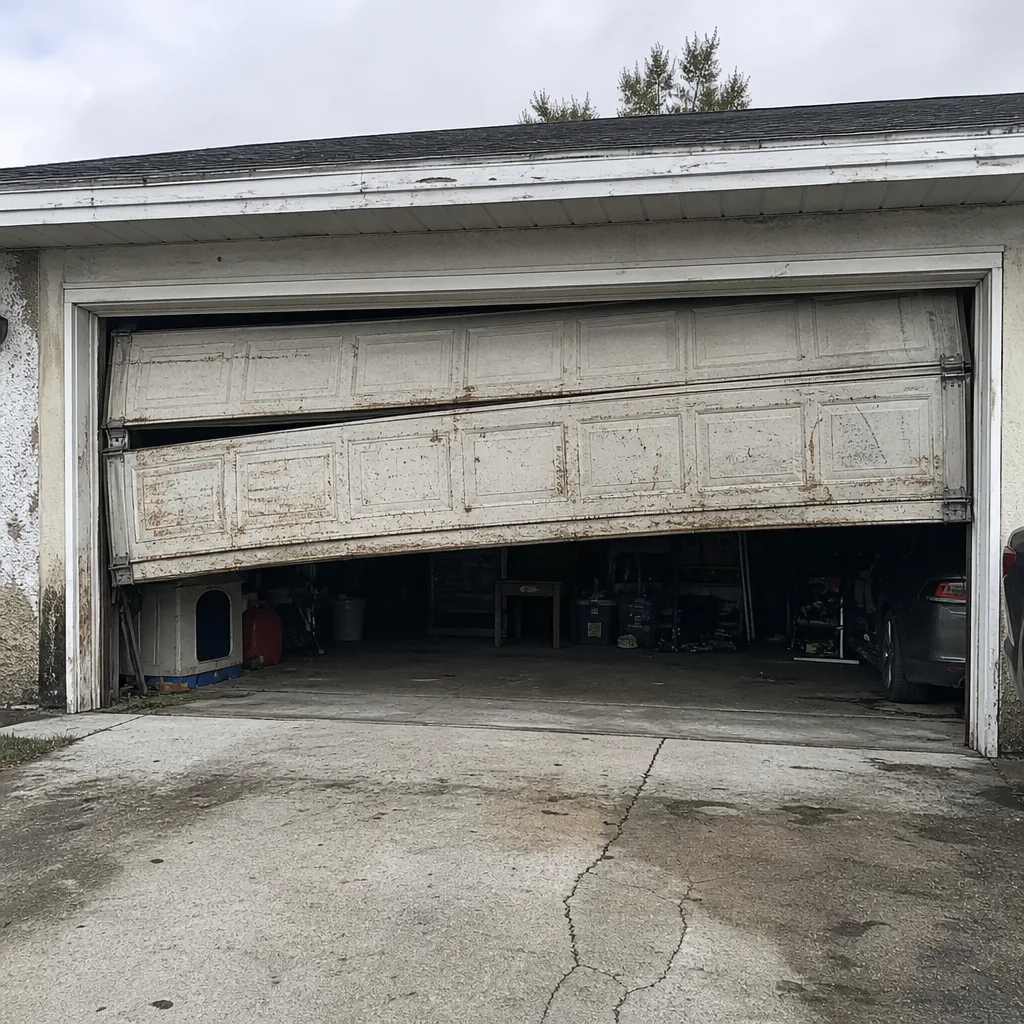 Before
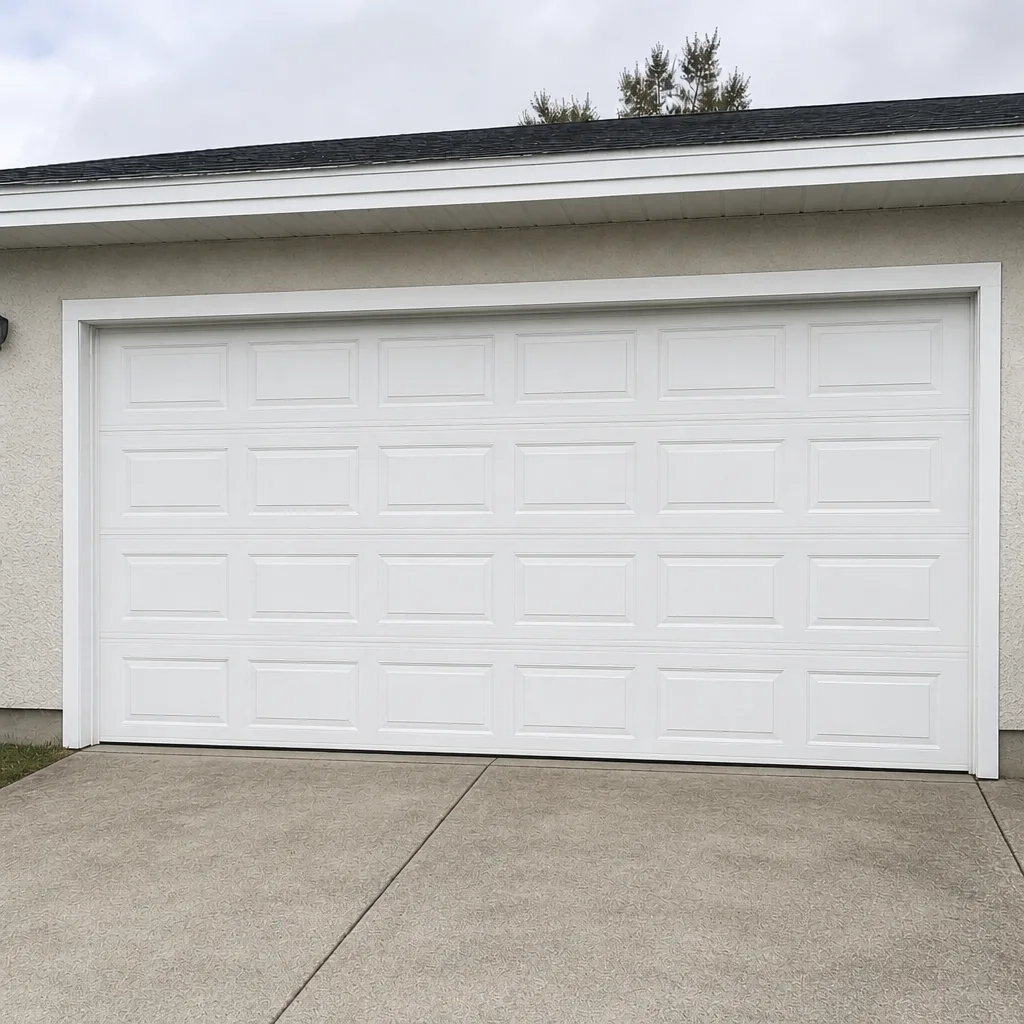 After
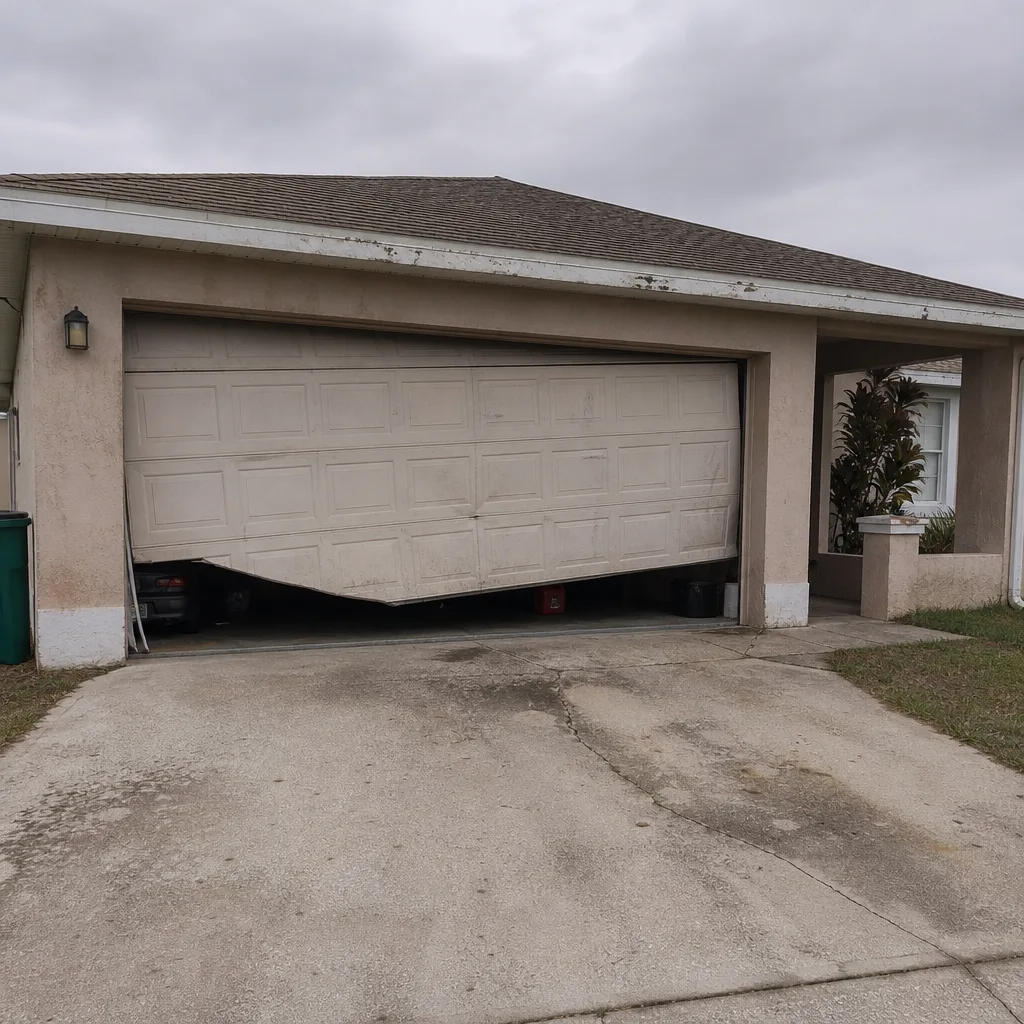 Before
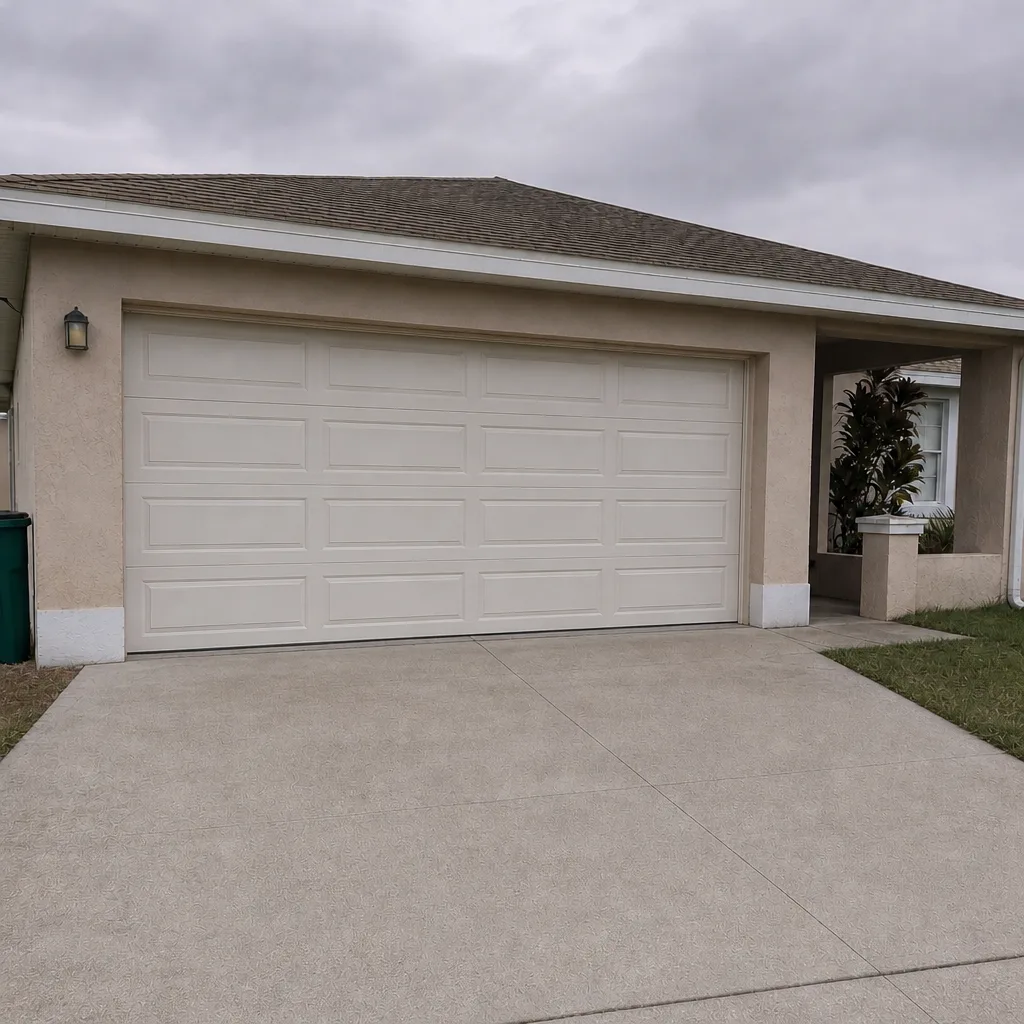 After
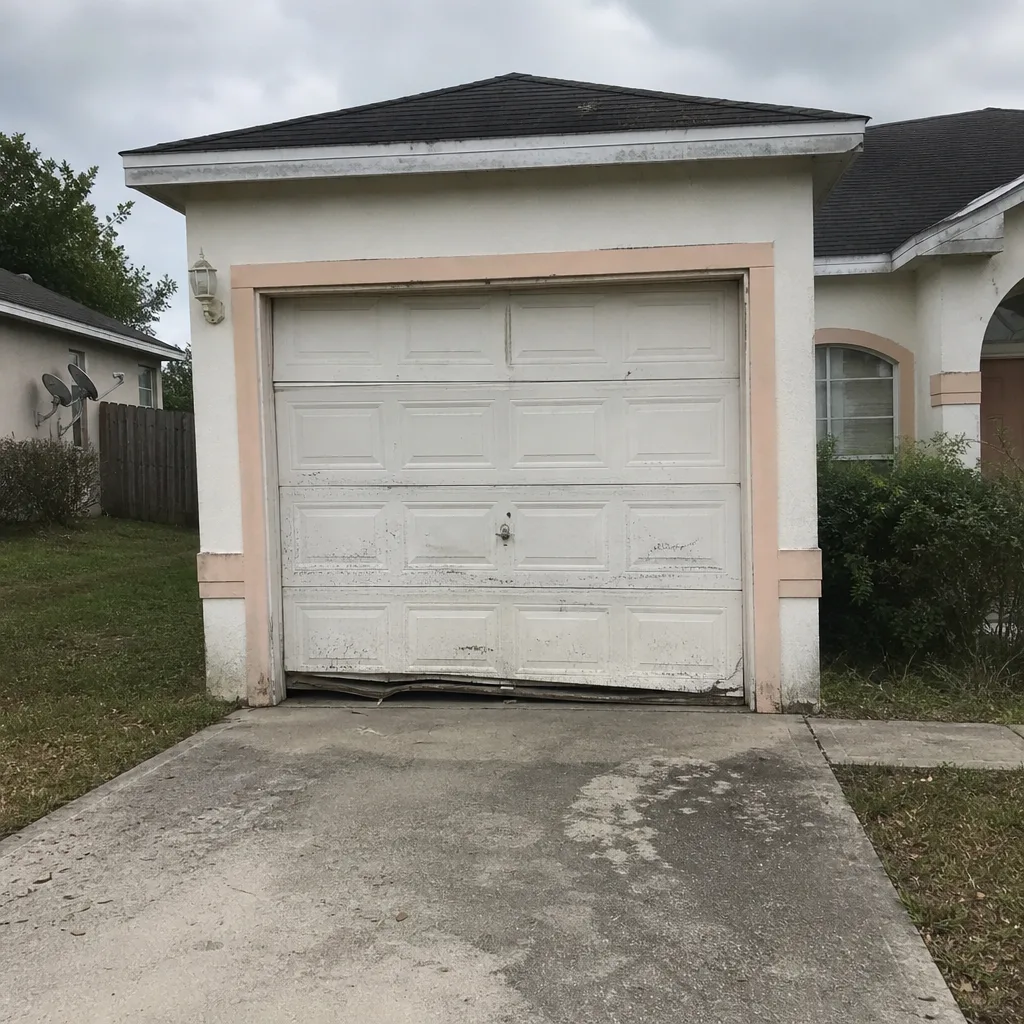 Before
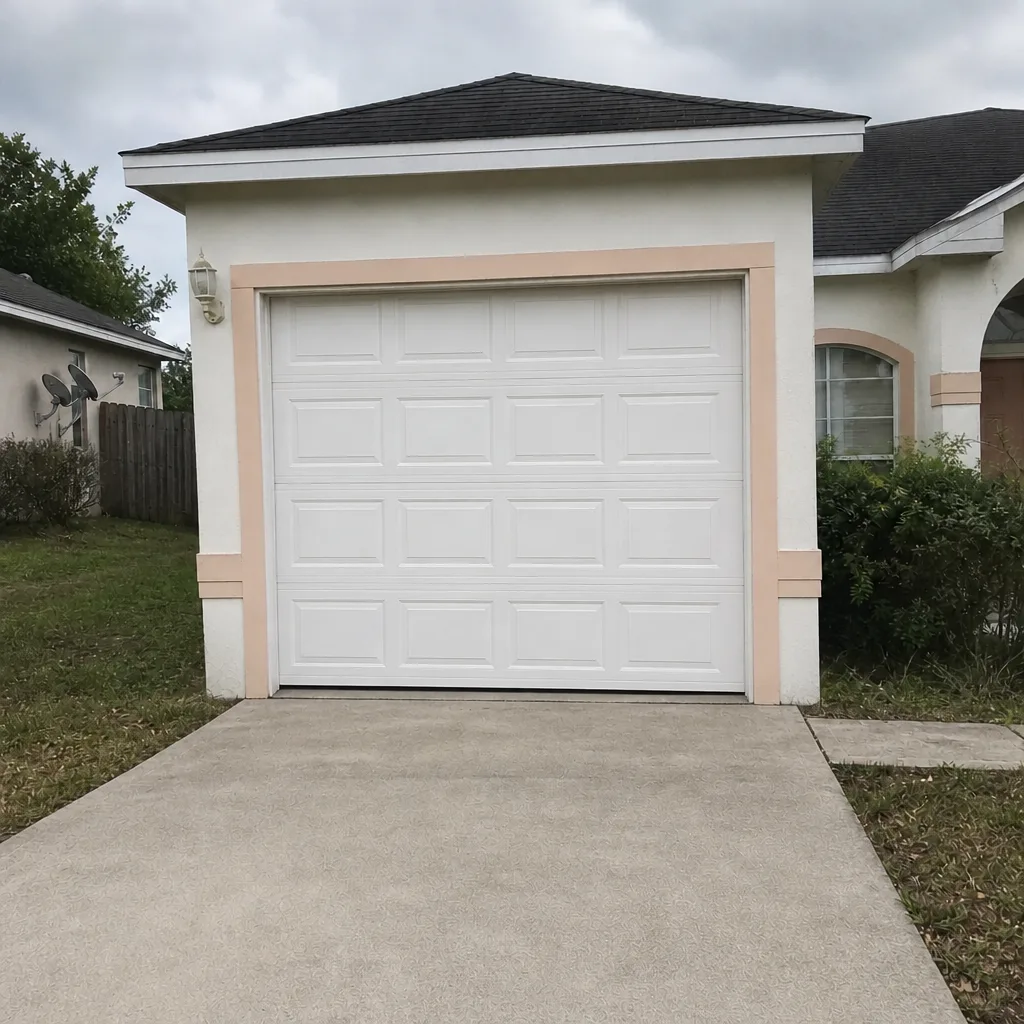 After
When to Call a Professional
Some garage door problems are worth watching. Others need a call today. Call right away if a spring has snapped, the door is stuck open, a door is jammed and trapping a car, a cable is visibly hanging or frayed, or the door stops partway and won’t close. Those are safety and security situations, and forcing the door can cause further damage. For everything else, like a noisy door, a slow lift, a remote that stopped working, or a worn bottom seal, a scheduled visit is fine. Poinciana Garage Door Repair Pros offers free estimates in Poinciana: call (866) 890-9418. We answer 24/7. Fast dispatch from 7am to 7pm, Sunday through Friday.
Frequently Asked Questions
Look for a label plate on the inside of a door panel or the end stile, and a data sticker on the opener motor housing. Both usually name the manufacturer and give a model or date code. If you can read those, you’ve identified the door. If the labels are worn off, a technician can identify it from the hardware and panel profile, but bringing a photo of the door to the first call helps.
Yes, most repair calls are handled same day, and spring and opener issues as well. Emergency service is available for a door stuck open or a spring trapping a car. Call (866) 890-9418 to get booked. We answer 24/7, with fast dispatch from 7am to 7pm, Sunday through Friday. Before any work starts, we quote the price and you agree it, so there’s no invoice surprise.
Replace both. Springs are replaced as a matched pair because the second spring in a pair has taken the same load for the same years. A pair carries roughly double the price of a single spring, so plan the budget for both. If you’re unsure which spring failed, get an opinion before deciding. Springs are dangerous; leave the work to a trained technician.
It depends on the repair history. One repair is normal. Three or more significant repairs in roughly two years, repeated matched-pair springs, bottom-panel rust, or parts the manufacturer no longer makes, and replacement usually makes more sense than patching. Builder-grade doors tend to reach that line earlier than upgrade-tier doors. A free estimate gives you both numbers so you can compare.
Check the bottom seal and side seals for damage, the bottom panel for rust or dents, and listen for grinding or a labored lift afterward. Wind-driven rain and debris can knock a door out of alignment or compromise seals. Hail is uncommon here, so most impact damage is from wind-blown objects. If the door runs rough after a storm, a technician can check the balance and track.
The label plate gives the manufacturer, model and often the date of manufacture. That combination determines parts availability and the realistic remaining lifespan of the door. It’s the most useful thing you can read before calling anyone, because a model number is what lets a technician order the right part on the first visit. If the label is missing, don’t guess; let a trained eye identify it.
The Bottom Line
Garage doors in Poinciana aren’t one category; they’re a mix of builder-grade doors from the early 2000s and newer upgrade-tier doors in places like Solivita. The right approach starts with knowing exactly what you have: brand, model, spring type and material. Read the label plate, check the opener sticker, and understand that humidity and storm cycles are the wear forces here. Repair is usually the answer for a well-built door. When repairs cluster and the parts are gone, replacement is the honest conversation. Whichever path, the price is quoted before any work starts. If your door is telling you it needs service, garage door repair is where to start.
Poinciana Garage Door Repair Pros works on LiftMaster, Chamberlain, Genie, Clopay, Amarr and Wayne Dalton equipment, so a service call is specific to your door’s brand and model. We handle Poinciana Garage Door Repair Pros with the same accountability as long-standing jobs: fast diagnosis, a clear estimate and a written price before work begins. To book a free estimate, call (866) 890-9418. We answer 24/7. Fast dispatch from 7am to 7pm, Sunday through Friday. We’re closed Saturday.
Written by the team at Poinciana Garage Door Repair Pros.