
Last updated November 21, 2026
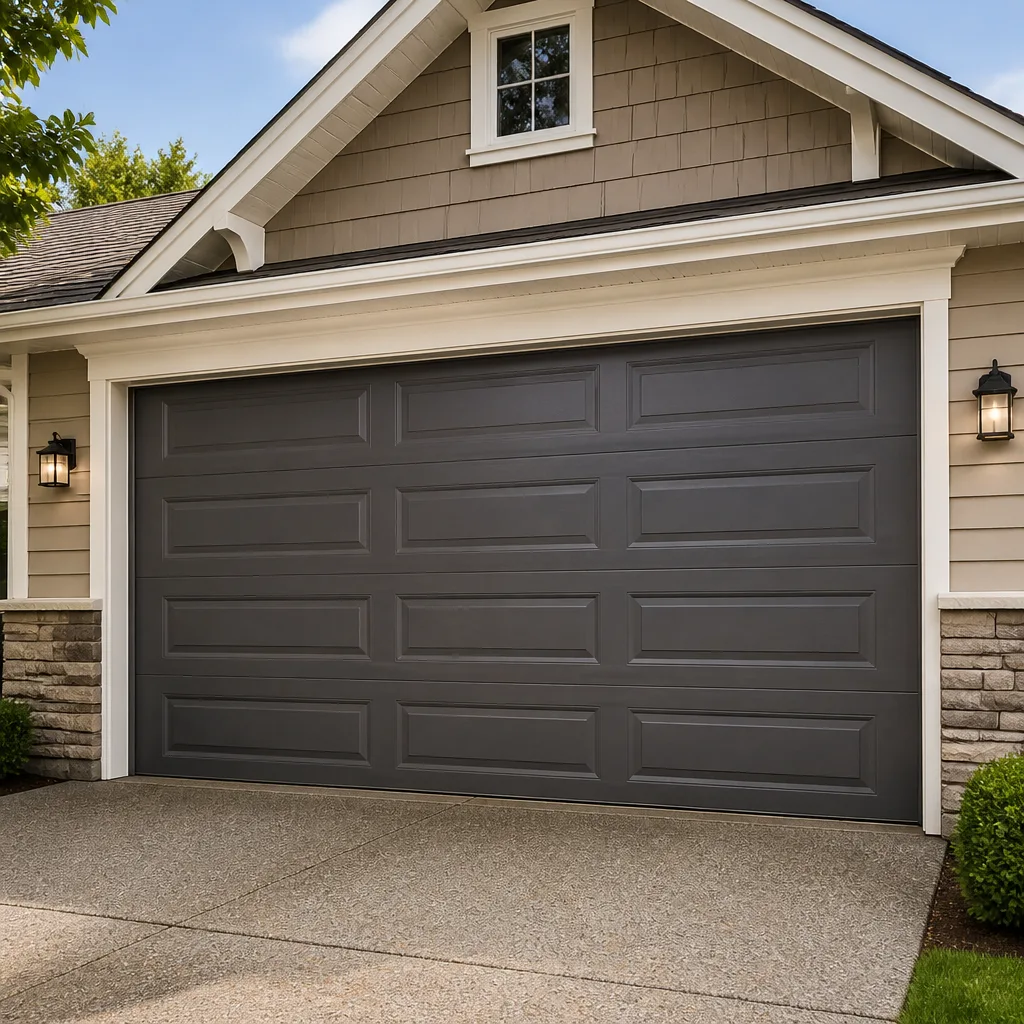 Raised-panel steel
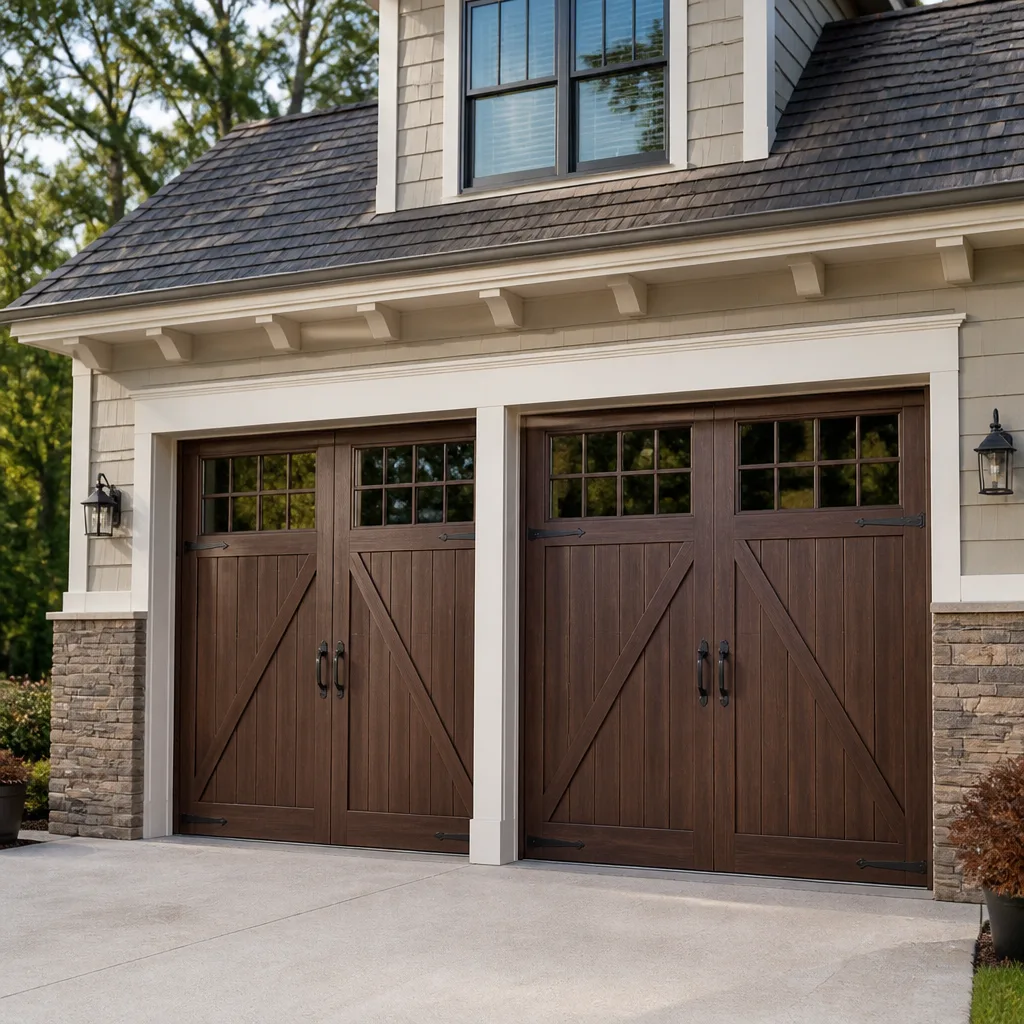 Carriage house
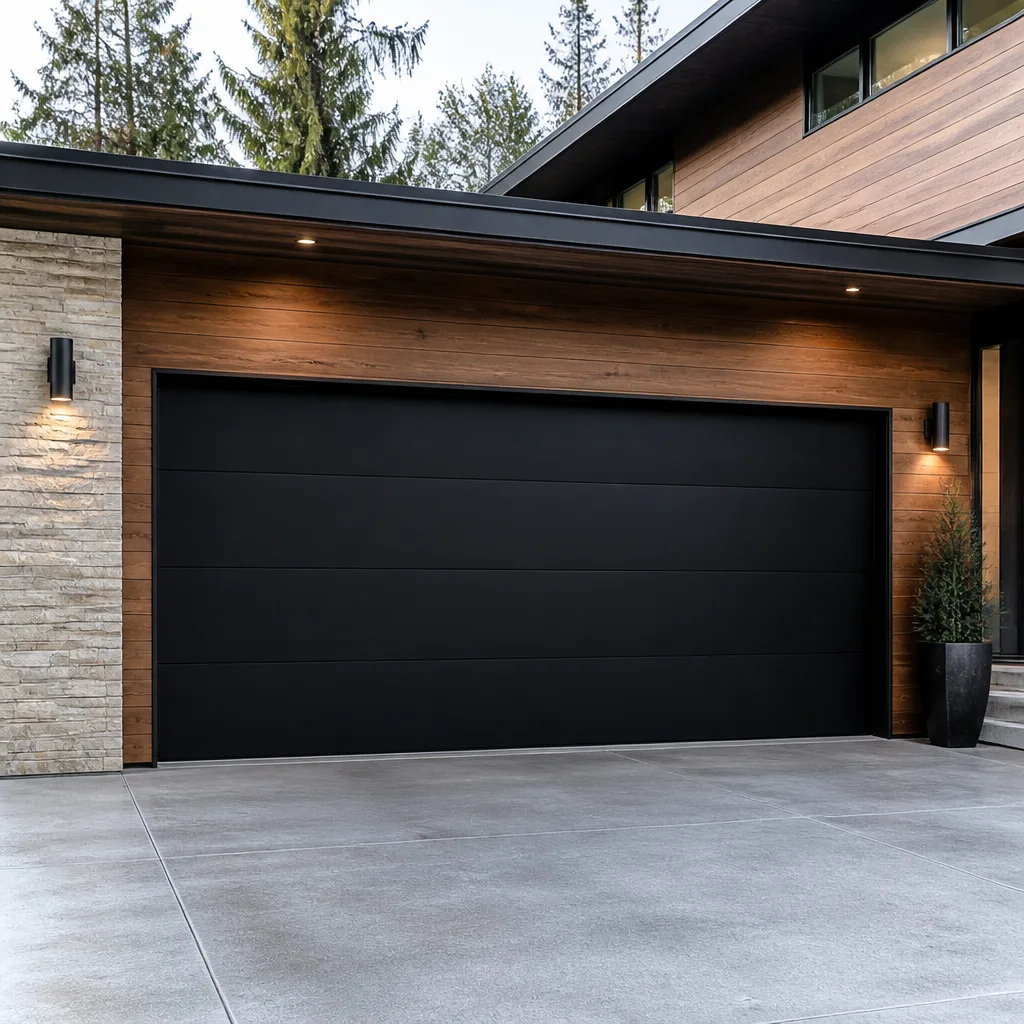 Modern flush
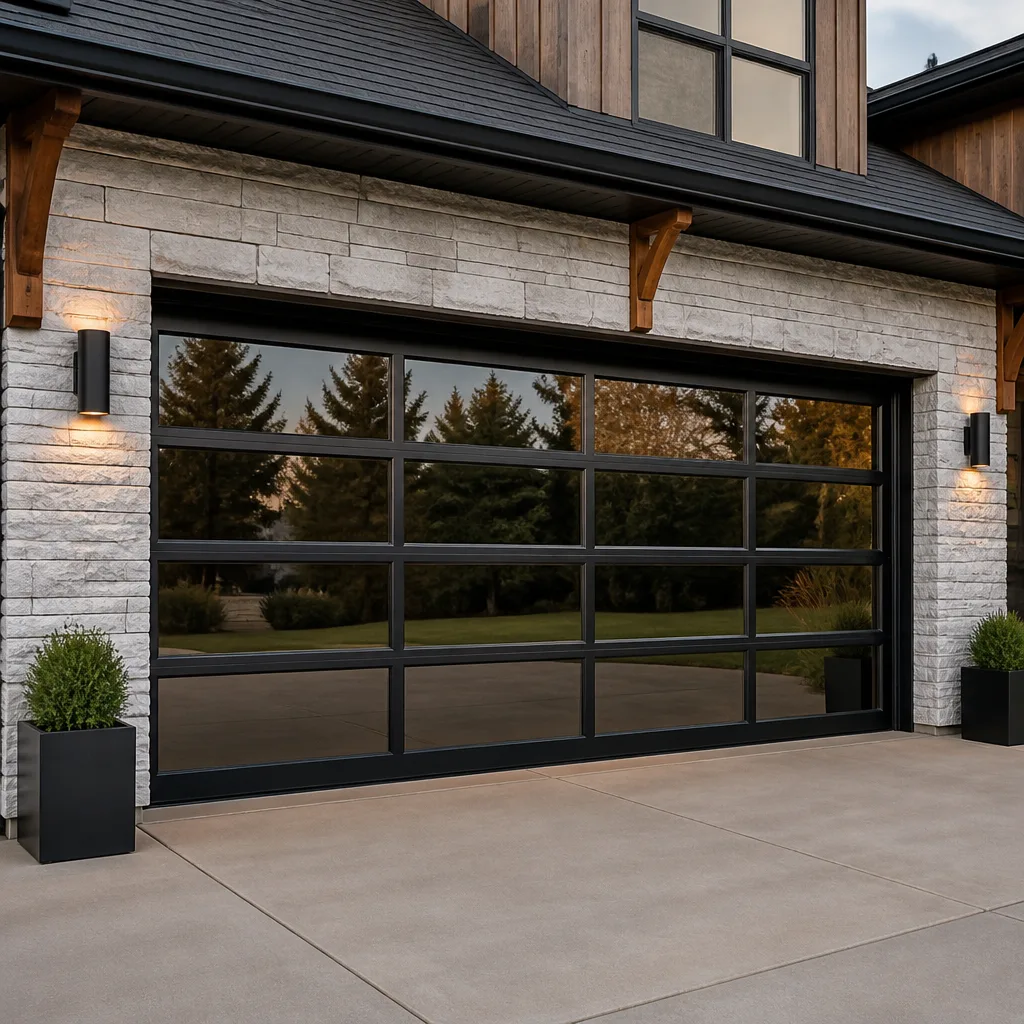 Full-view glass
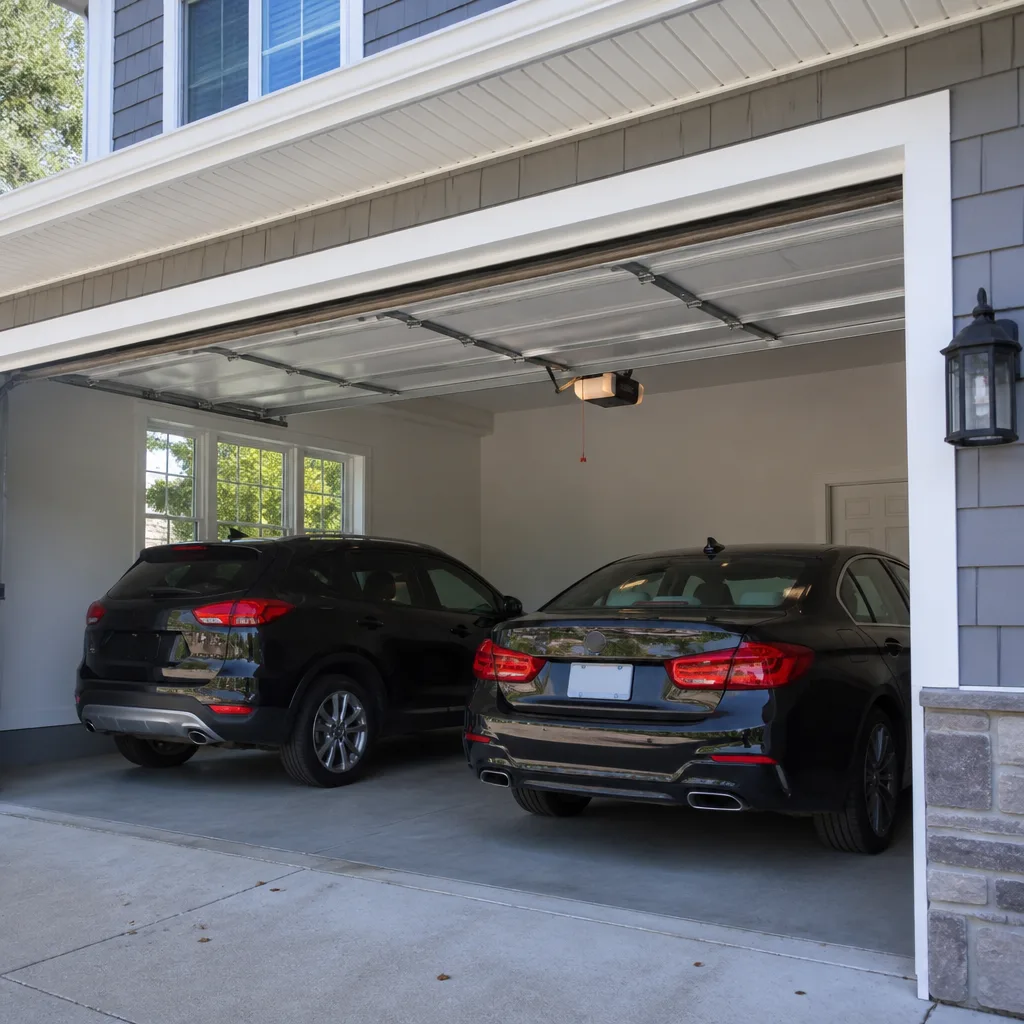 LiftMaster openers
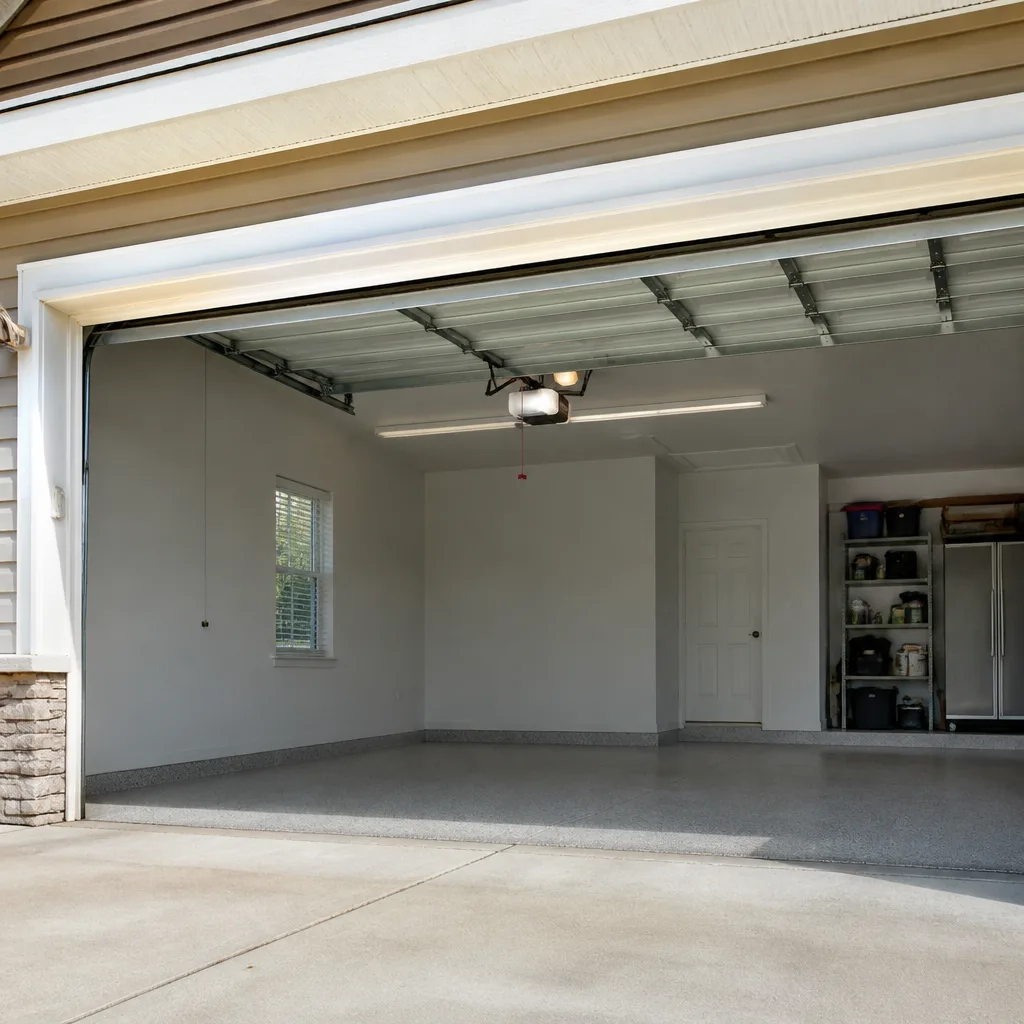 Chamberlain openers
Full 25-point door and opener safety check with every visit - springs, cables, rollers, tracks, and your LiftMaster or Chamberlain opener included
You get a price before we start. It does not change when the pro arrives.
Get your free estimateGarage Door Permits, Codes & Inspections in Poinciana, FL: What You Need to Know
Most homeowners assume a garage door replacement is a simple swap, the kind of project you schedule and forget about. In Florida, it’s a regulated construction project with a wind-load rating attached to the door itself, and skipping the paperwork is a mistake that follows the house, not the contractor. Here’s what you’ll learn in this guide: exactly which garage door projects need a permit in and around Poinciana, how Florida’s wind-load product approval system works, what the inspection actually looks at, and what HOA review adds on top of the county process. By the end you’ll know whether your project is a permit job or a like-for-like replacement that skips the county counter entirely.
Quick Answer
In Poinciana, a garage door replacement needs a permit whenever the door, its size, its wind-load rating, or its anchoring changes – which covers nearly every full door swap on a home built to Florida wind standards. Like-for-like replacement of the same approved model in the same opening is generally the only category that can avoid a permit, and even that depends on the county and your HOA. Repairs to springs, cables, rollers, tracks and openers are maintenance, not construction, and don’t require a permit.
Styles & brands we work with
- Raised-panel steel
- Carriage house
- Modern flush
- Full-view glass
- LiftMaster openers
- Chamberlain openers
Table of Contents
- Which garage door projects need a permit in Poinciana?
- Florida wind-load requirements and how to read a product approval number
- What the inspection process looks like and what an inspector checks
- How unpermitted garage door work shows up at resale
- What Poinciana HOA approval adds beyond the county permit
- The full permit process, step by step
- Repair vs. replacement: where the permit line falls
- Typical costs when you pull the permit properly
Which garage door projects need a permit in Poinciana?
A full garage door replacement requires a permit in Osceola County and Polk County, the two counties that share Poinciana. So does any project that changes the door’s size, adds or removes a window section, swaps the spring system to a different type, or changes how the door anchors to the framing. In Florida, the permit isn’t about the aesthetic change – it’s about verifying the new door meets the wind-load requirement for its location, and that the anchoring and reinforcement match what the manufacturer’s product approval specifies.
Here’s the practical breakdown of project type against permit need:
- New door replacement (different model or rating): Permit required. The new door must carry a Florida product approval matching your wind zone.
- Same-size, same-model like-for-like swap: Often permit-exempt, but confirm with the county building department and check your HOA documents before assuming. Documentation of the original approval is usually needed.
- Door size change or second-car door added: Permit required. Structural work on the opening always triggers review.
- Spring, cable, roller, track or hinge repair: No permit. This is maintenance on an existing system.
- Opener replacement or smart opener install: No permit in most cases, though electrical work tied to a new circuit may require a separate electrical permit.
- Hurricane reinforcement added to an existing door: Permit status depends on the county – some accept it as an alteration, others want a permit and inspection. Ask before ordering parts.
Poinciana straddles county lines, and that matters here. A property on the Osceola side goes through Osceola County’s building department; one on the Polk side goes through Polk. The two counties interpret Florida’s wind provisions the same way because the state code drives it, but the filing systems, inspection scheduling and document requirements differ. Check which county your parcel sits in before you call anyone, because the contractor has to pull the permit in the right jurisdiction. If you’re not sure, your property tax record settles it in a minute.
One habit that saves trouble: before you order a door, ask for the address, county, wind zone classification and the existing door’s product approval number. Any reputable installer will ask for those four things, and so will the building department. If a company starts quoting a replacement without asking which county you’re in, they’re not planning to pull the permit properly.
Florida wind-load requirements and how to read a product approval number
Florida evaluates garage doors as wind-borne debris protection products, which is why every approved door carries a Florida Product Approval number and a design pressure rating. Those two pieces of information tell the building department whether the door is legal for your home’s wind zone, and they have to be printed on the door’s label or listed in the manufacturer’s documentation for the specific model and size. If a door doesn’t appear in the Florida approval database for the rating your home needs, it can’t be permitted here, period.
Reading the approval matters more than homeowners expect, because the number is model-specific and size-specific. A Clopay or Amarr door that’s approved in one width and height combination is not automatically approved in another. The approval also specifies the reinforcement requirements – the struts, brackets and anchoring pattern that let the door meet its rated design pressure. Installers who put in a properly approved door but anchor it to a different pattern than the approval specifies have installed an unapproved assembly, even if the door itself is legal.
How to check a door’s approval before you buy:
- Ask the installer for the Florida Product Approval number for the exact model, width and height they’re proposing.
- Verify the number looks up in the state’s product approval database and the design pressure rating matches what your wind zone requires.
- Confirm the approval’s installation instructions list the anchoring, struts and reinforcement the door needs.
- Compare the proposed door size to the sizes covered in the approval – a size not listed isn’t approved for that model.
- Keep a copy of the approval document with your permit file and your closing documents.
Poinciana’s housing stock covers a lot of range – older single-car doors on the original sections and newer two-car doors with windows and carriage-style panels in the more recent communities. That range means the same wind requirement can demand different door assemblies depending on the opening size. A wide, tall door with window sections needs a different rating and reinforcement package than a solid single-car door. This is the single biggest reason “like-for-like” replacements sometimes can’t be treated as like-for-like: the original door may not meet current requirements, or its model may be discontinued and replaced by a newer approval.
In our experience the confusion almost always starts at the sales conversation, not the installation. A homeowner is shown a door they like, agrees to a price, and only later learns the model isn’t approved for their wind zone. Ask for the approval document up front. A company that sells wind-rated doors regularly has those documents on hand and treats the question as routine – and that’s also why we keep garage door repair and replacement under one roof, so the conversation about a repair can shift to a compliant replacement without a second contractor.
What the inspection process looks like and what an inspector checks
The inspection is a verification visit, not a quality review. The county inspector is confirming that what’s installed matches the permitted scope, the door’s product approval and the anchoring requirements in that approval. There’s typically a rough-in or pre-drywall stage for projects with structural work, then a final inspection once the door is hung and operating.
What an inspector actually checks on a garage door permit:
- Product approval match: The installed door’s label and model number match the permit application and fall within the approved sizes.
- Wind-load rating: The door’s design pressure meets the requirement for the property’s wind zone.
- Anchoring and reinforcement: Brackets, struts and fasteners are installed per the approval document, not per whatever the installer preferred.
- Opening and framing: Any structural changes to the opening match the approved plans.
- Track and header attachment: The track system is secured to structure, not to drywall or trim.
- Operation and safety: The door balances, opens and closes fully, and the safety features function.
For the homeowner, the process looks like this:
- Contractor submits the permit application with the door’s product approval and installation details.
- County reviews and issues the permit.
- Door is installed and any structural work is done.
- Contractor requests inspection – these are separate from the installation; the door being hung doesn’t mean the inspection is booked.
- Inspector visits, verifies, and either approves or notes corrections.
- Permit closes once final approval is recorded.
Two practical notes. First, inspections are scheduled by the contractor, and missing the window or failing the first visit costs time – so the contractor’s paperwork discipline matters as much as their installation work. Second, get the closed permit and the inspection record from the contractor before you pay the final invoice. It’s the single document that proves the work was done legally, and it’s what a buyer’s title search will look for.
We’ve seen homeowners stuck mid-project because the door on site didn’t match the approval they filed, and the correction meant reordering. It’s a frustrating delay that comes entirely from the paperwork stage. If you’re already dealing with a failed door and need the repair side of the decision, our garage door spring repair team handles the safety-critical work that keeps an existing door compliant and operating while you sort out the replacement plan.
How unpermitted garage door work shows up at resale
Unpermitted garage door work shows up at resale in the county’s permit records and in the home inspection, and in Florida that record travels with the property. When a buyer’s agent runs a permit search, a garage door replacement with no permit on file reads as an open question: was the door installed to the wind-load standard the mortgage and insurer require? That question is enough to stall a closing until it’s resolved.
Where it surfaces, in order of how often we hear about it:
- The home inspection: An inspector looking at a newer door with no permit history will flag it as unverified work and may note the door’s label and anchoring for follow-up.
- The permit search: Buyers, agents and lenders increasingly run permit histories on properties. A missing permit on a wind-rated component is a documented red flag.
- Insurance review: Florida homeowners insurance is heavily tied to wind mitigation. An unpermitted, unverified door can complicate a wind mitigation inspection and the coverage discussion that follows.
- The seller’s disclosure: Florida’s disclosure requirements put known unpermitted work in front of the buyer, which changes the negotiation.
The fix isn’t always dramatic – some counties will accept an after-the-fact permit with an inspection and the door’s approval documents, sometimes with additional fees. But it takes time, it can require opening up the installation to verify anchoring, and it can’t be done quietly during a closing week. The cheaper path is always to pull the permit when the door goes in.
Poinciana has a lot of homes that have changed hands, and a lot of doors replaced by the previous owner. If you’re buying here, ask for the permit history on any door that looks newer than the house. If you’re selling, pull your own permit records before you list – it’s a much better conversation to have early than during a closing week.
What Poinciana HOA approval adds beyond the county permit
Most Poinciana communities have a homeowners association, and many of them review garage door replacements before the county does. HOA architectural review covers things the county doesn’t care about: the door’s color, its panel style, whether windows are allowed, whether carriage-style hardware is permitted, and sometimes the exact model. A door that’s perfectly legal under Florida’s wind provisions can still be rejected by an architectural review committee for its appearance.
The two processes run in parallel and neither replaces the other. A county permit doesn’t satisfy HOA requirements, and an HOA approval doesn’t exempt you from the permit. Plan for both, and run the HOA review first – if the committee wants a different door, you don’t want to have already filed a permit application for the wrong one.
What HOA review typically asks for in Poinciana:
- Manufacturer, model and color of the proposed door
- A photo or spec sheet showing the panel style and whether it has windows
- The Florida Product Approval number, so the association can confirm the door is wind-rated
- Installation details, including whether any trim or hardware changes the door’s appearance
- Contractor information, and sometimes a copy of the signed contract
Timelines vary by community and committee – some are quick, some meet on a schedule that adds weeks. Build that into your project plan. In our experience the HOA review is the step homeowners most often forget to ask about, and it’s the one that delays a straightforward replacement the longest when the proposed door doesn’t match the neighborhood’s established look. A Wayne Dalton or Clopay model line usually includes enough color and panel options to match most associations, but the committee has to actually approve the specific one you want.
The practical sequence is: read your HOA’s architectural guidelines, submit the review with a full spec, wait for written approval, then file the county permit. Keep everything in writing. If a contractor tells you the HOA doesn’t need to know, ask them to put that in writing instead – and then check with your association directly.
The full permit process, step by step
Here’s the sequence in the order that avoids rework. It’s written for the Poinciana homeowner managing a replacement, but it’s the same order a professional installer follows.
- Confirm your county and wind zone. Poinciana spans Osceola and Polk. Check your property record, then confirm which building department has jurisdiction.
- Read your HOA architectural guidelines. Know what styles, colors and models are allowed before you shop. Submit the HOA request early.
- Get the existing door’s approval number if you can find it. It’s usually on a label on the door panel or in the original closing documents. This helps determine whether a like-for-like exemption might apply.
- Select a door with a Florida Product Approval valid for your wind zone and your opening size. Get the approval document, not just a brochure.
- Get a written estimate that states the permit will be pulled. The price should reflect the permit cost as a line item or an explicit inclusion – not an afterthought.
- Submit the HOA request. Wait for written approval before proceeding.
- Contractor files the permit application with the product approval, installation details and any structural plans.
- Permit issued, door installed. The installation follows the approval’s anchoring and reinforcement requirements.
- Inspection requested and passed. Get the inspection record.
- Permit closed. Collect the closed permit document and file it with your home records. Keep the product approval too.
If a repair is what you actually need rather than a replacement, this whole sequence may not apply. Springs, cables, tracks and openers are maintenance and don’t need a permit. The line falls at the point where the door assembly or its anchoring changes – which is exactly where garage door opener repair sits on the safe side, since the opener is a mechanism, not part of the wind-rated envelope.
Repair vs. replacement: where the permit line falls
Repairs don’t need a permit. Replacements usually do. The dividing question is simple: does the work change the door panel assembly, its size, its anchoring or its wind-load rating? If yes, it’s a permit project. If you’re replacing a spring, a cable, a hinge, a roller, a track bracket or an opener, you’re maintaining the existing approved assembly, and no permit is involved. These are the jobs our garage door repair work covers most often, and they’re also the jobs where waiting costs the most – a broken spring takes the door out of service entirely.
Where it gets gray:
- Replacing a single damaged panel on a multi-panel door: Generally a repair if the replacement panel matches the original model and approval. If the panel model is discontinued and the replacement doesn’t match, it becomes a modification and can trigger review.
- Swapping standard springs to a different type or count: Usually maintenance, but if the change affects the door’s balance and the assembly’s structural behavior, ask the county. Safety-wise, spring work is always a trained-professional job regardless of permitting.
- Adding windows to an existing door: A modification. It changes the door’s structural makeup and typically requires a permit.
- Replacing the opener with a smart or Wi-Fi-connected model: No permit for the opener itself in most cases. If the installation requires a new electrical circuit, that electrical work may need its own permit.
- Repairing a damaged bottom section after impact: Depends on whether the replacement section matches the approved assembly. If it does, it’s a repair; if it changes the assembly, it’s a replacement.
When in doubt, call the building department and describe the work. It takes five minutes and settles the question definitively. The county has no interest in making a repair into a permit project – they just need to know the wind-rated envelope of the house is intact. And a door that’s out of balance or running on a broken spring isn’t going to wait for a permit review, so the repair side and the permit side of a project often run on different timelines.
Typical costs when you pull the permit properly
We can give you typical ranges for the door and installation side, since those are the numbers homeowners usually want. The permit fee itself is set by the county and depends on the project value and filing type – the building department will tell you exactly, and it’s usually a modest line item next to the door cost. Ask your contractor for the permit cost as a separate figure rather than bundled darkly into the total.
| Line item | Typical estimated range |
|---|---|
| Single-car door replacement (wind-rated, installed) | $900 – $2,000 |
| Double-car door replacement (wind-rated, installed) | $1,400 – $3,500 |
| One spring replacement | $180 – $340 |
| Matched spring pair replacement | $360 – $680 |
| Opener replacement (installed) | $300 – $650 |
| Hurricane reinforcement retrofit (installed) | $400 – $900 |
| Permit fee (county-set, separate) | Confirm with the building department |
Two of those rows need explaining. Spring pricing is shown for one spring because that’s the unit, and a matched pair is usually replaced together – a pair costs about twice the single-spring range. And the permit fee is deliberately left to the county, because it’s calculated from their schedule and varies with the project value and jurisdiction, not with the door. Any contractor quoting you a firm permit fee before they’ve filed is estimating, not quoting.
The written estimate sets the final price, and the permit cost should appear in it as its own line. That way, if the county’s fee comes in at a different figure than expected, you can see the difference rather than wonder what changed. The price for the work is quoted and agreed before anything starts, and that’s true whether the job is a spring, an opener or a full replacement. If you’re weighing the permit cost against the door cost, keep the whole picture in mind: the closed permit is what protects the value of the door you just paid for.
We work on doors from Clopay, Amarr, Wayne Dalton, Craftsman and the other major brands, and the product approval asking is the same for all of them. For the full picture of what we cover on the repair and installation side, see Poinciana Garage Door Repair Pros.
Common Mistakes to Avoid
- Assuming a “like-for-like” replacement skips the permit automatically. Like-for-like exemptions exist in some counties and not others, and the original door’s model has to still be approved. Confirm with the building department before you rely on it – the exemption isn’t yours to grant.
- Ordering the door before checking the HOA guidelines. A committee rejection after the door is ordered means either a different door or a long argument. Read the guidelines first, submit the review with a full spec, and get the approval in writing.
- Filing the county permit before the HOA review is settled. If the association wants a different model or color, you’ve filed the wrong scope. Run the HOA review first, then the permit.
- Assuming the color shown is approved for your wind zone and size. The Florida Product Approval is model-and-size specific. A door approved at one width isn’t approved at another, and the approval specifies the anchoring pattern. Asking for the document costs nothing.
- Letting the installer choose the anchoring pattern. Even an approved door installed to a different anchoring spec than the approval calls for is an unapproved assembly at inspection. The approval document is the instruction sheet.
- Not keeping the closed permit. The closed permit and inspection record are the proof the work was legal, and that’s what a buyer’s permit search looks for. File them with your closing documents.
- Calling a permit question a repair question. A homeowner with a broken spring sometimes gets caught in a permit conversation that doesn’t apply to the work. Confirm the project type before deciding what the county needs.
- Letting the installer skip the inspection request. The door can be fully installed and still not inspected. If the inspection isn’t requested, the permit doesn’t close, and the paperwork gap is exactly what shows up later.
See the difference
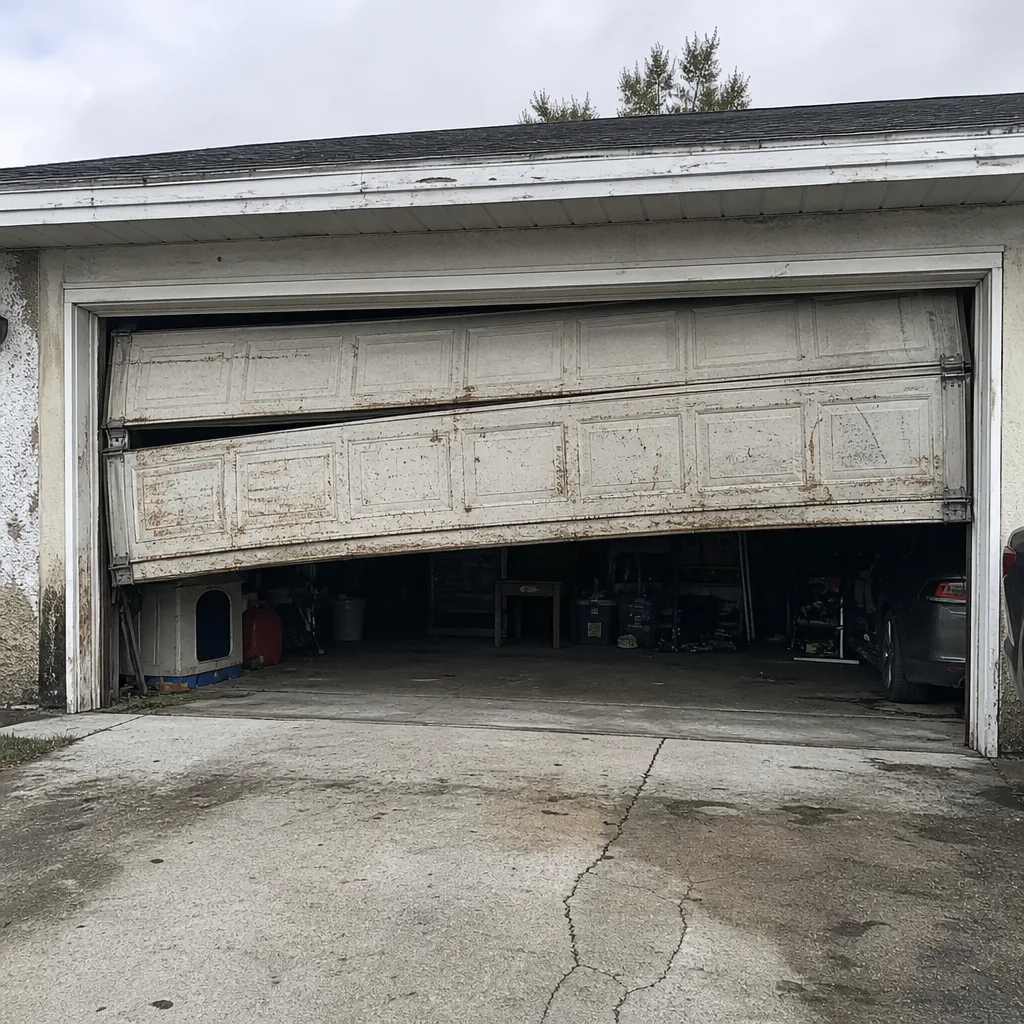 Before
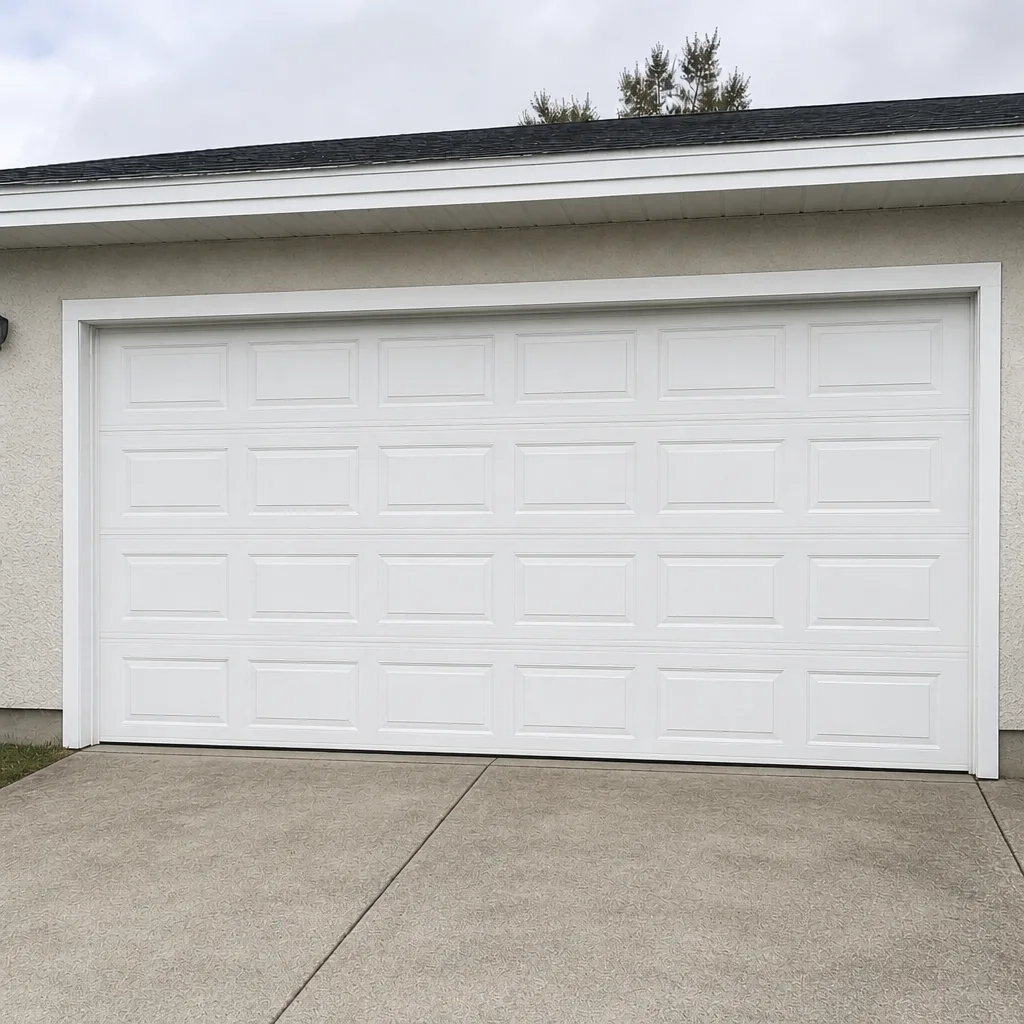 After
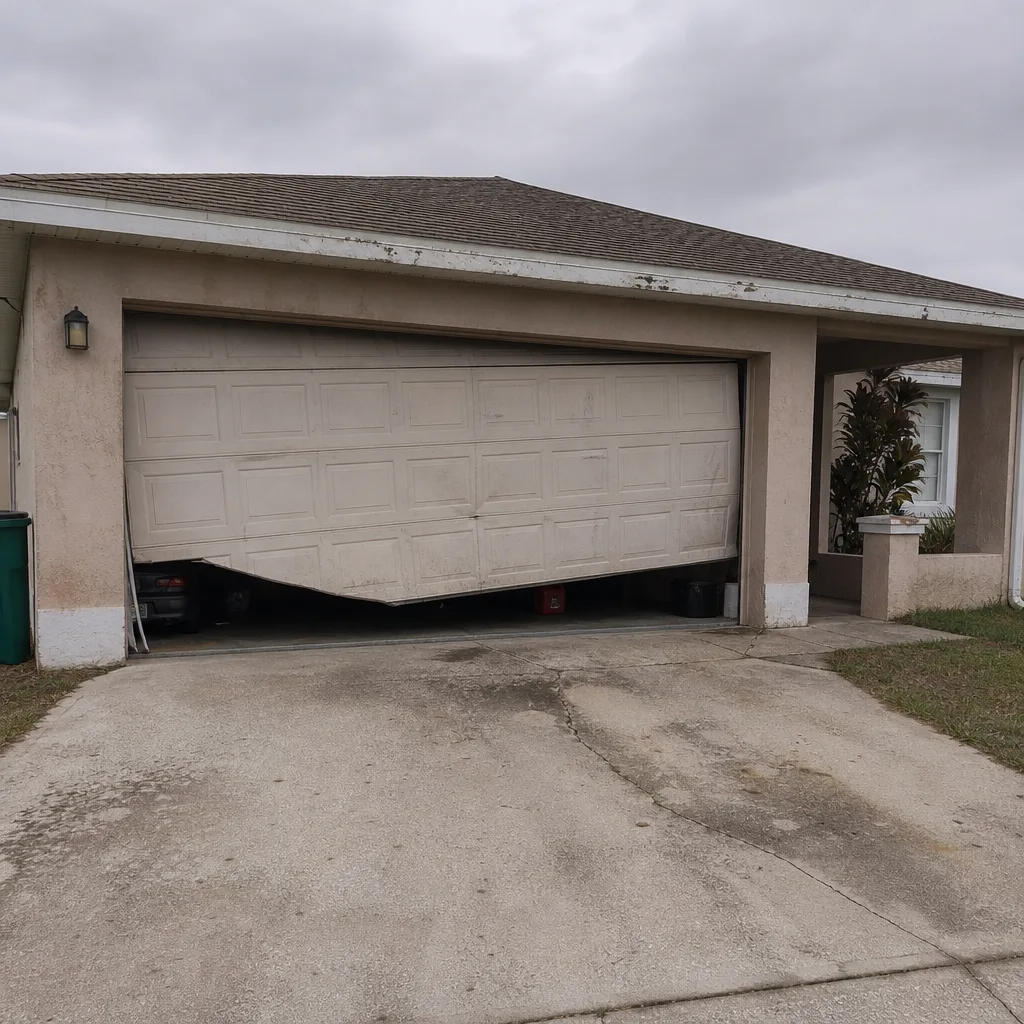 Before
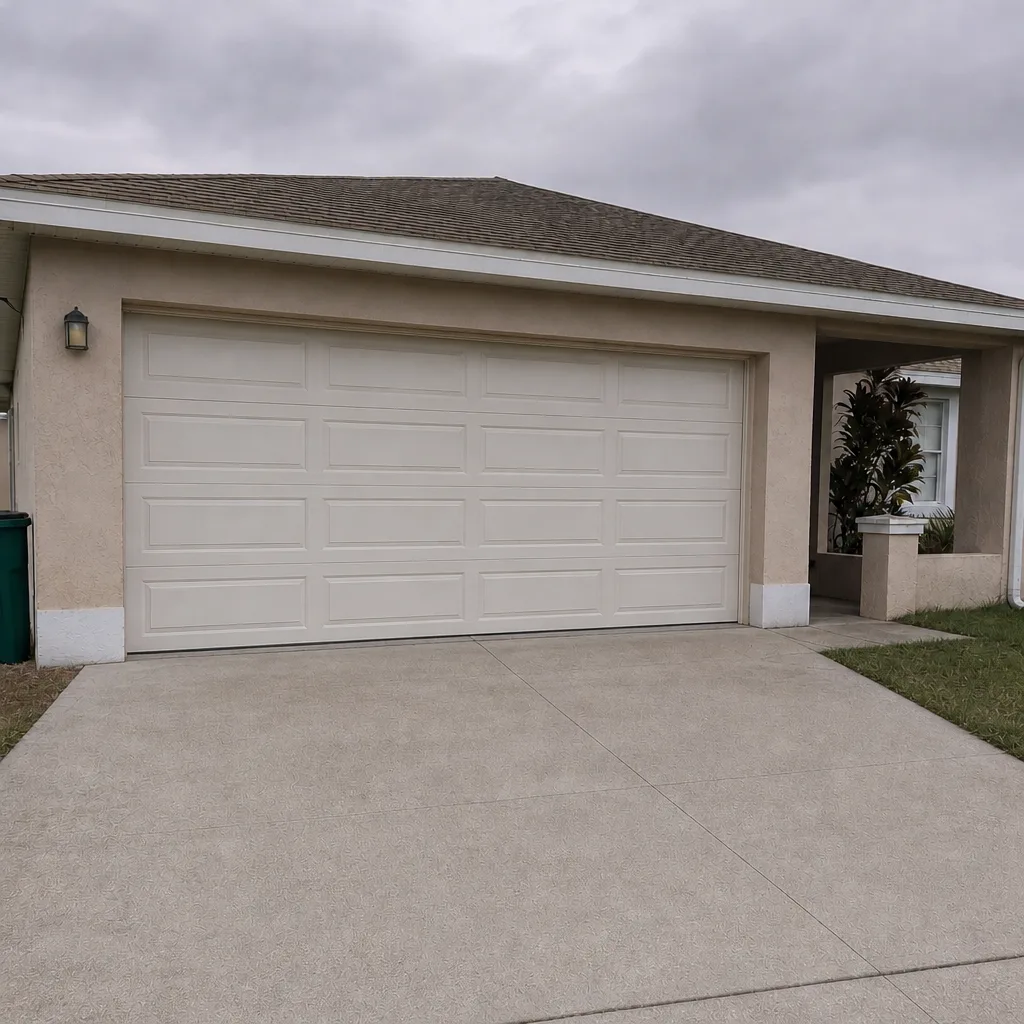 After
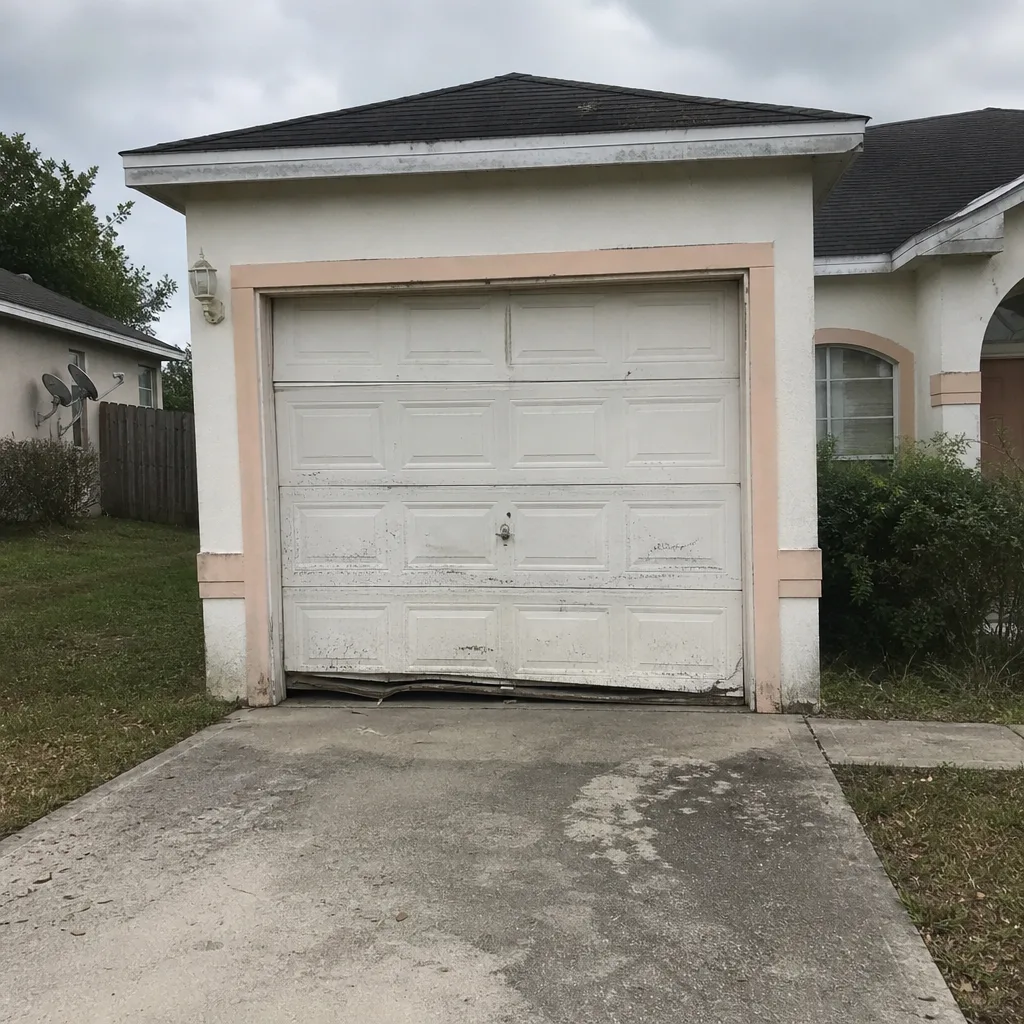 Before
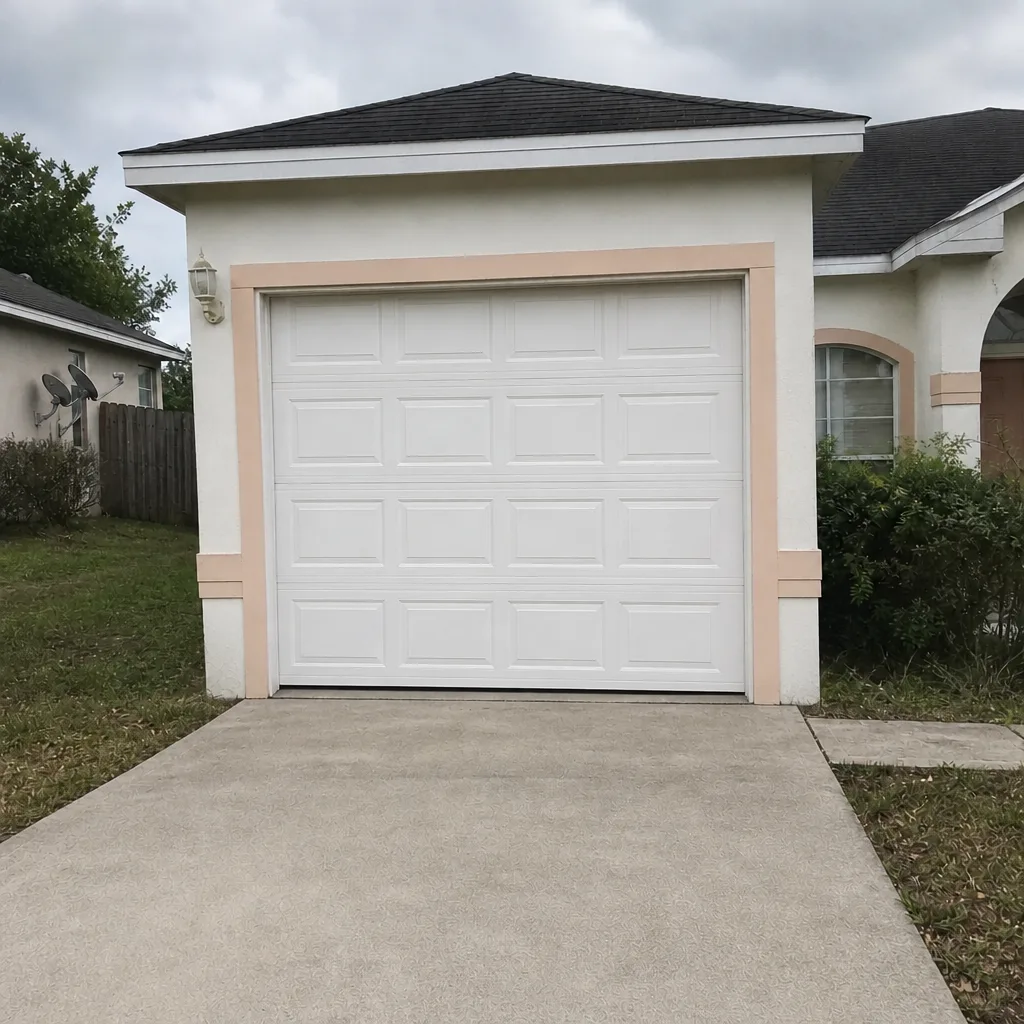 After
When to Call a Professional
Call a professional when the door is going to be replaced, when the project touches the wind-rated assembly, or when you’re not sure whether the work counts as repair or replacement. Call immediately when a spring breaks, a cable lets go, the door comes off its track, or the opener fails with a car trapped inside – those are safety situations, and a broken spring or cable carries enough stored energy to cause serious injury if a homeowner attempts it. Springs are dangerous: leave it to a trained technician. Our technicians have up to 15 years of experience and we work on the major door and opener brands, from LiftMaster, Chamberlain, Genie and Craftsman openers to Clopay, Amarr and Wayne Dalton doors. We also offer emergency garage door service for the situations that can’t wait for a scheduled appointment. Poinciana Garage Door Repair Pros offers free estimates in Poinciana – call (866) 890-9418 for an estimate, and we’ll walk through whether your project needs a permit before anything is ordered.
Frequently Asked Questions
Yes, in most cases. Osceola County and Polk County both require a permit for a garage door replacement that changes the door model, its size, its wind-load rating or its anchoring. Only a true like-for-like swap of the same approved model in the same opening may be exempt, and that depends on the county and your HOA. Call (866) 890-9418 for an exact quote on the work once you know which category your project falls into – estimates are free.
A single-car wind-rated door replacement typically runs $900 to $2,000 installed, and a double-car door typically runs $1,400 to $3,500, before the county permit fee. Spring repair on an existing door is a separate, smaller job at $180 to $340 for one spring. The written estimate sets the final price, and the permit fee should appear as its own line. Call (866) 890-9418 and we’ll give you a free estimate.
A Florida Product Approval number identifies a specific garage door model and size that the state has approved for use in Florida’s wind zones, and you’ll find it on a label on the door panel or in the manufacturer’s documentation. It goes in the permit application so the county can verify the door meets the wind-load requirement for the property. Ask for the approval document before you agree to any door, and keep a copy with your home records.
Yes. HOA architectural review covers appearance – color, panel style, windows, carriage hardware – while the county permit covers wind rating, anchoring and code compliance. A door that’s fully legal under Florida’s wind provisions can still fail architectural review, which is why the HOA approval should come before the permit filing. Read your association’s guidelines and get written approval before you order.
It shows up in the permit search during a home sale and in the home inspection, and in Florida it’s the kind of thing a buyer’s agent will flag before closing. Some counties accept an after-the-fact permit with an inspection and the door’s approval documents, sometimes with additional fees, but it takes time. The fix is cheaper and faster than the sale delay – pull the permit when the door goes in.
No. Spring, cable, roller, track, hinge and opener work is maintenance on an existing approved assembly, not construction, so no permit is involved. A new electrical circuit for an opener would need a separate electrical permit in most cases. Spring work is the safety-critical one – a broken spring or cable should go to a trained technician, never a DIY attempt. Call (866) 890-9418 for a free estimate.
The Bottom Line
In Poinciana, a garage door replacement is a permitted construction project, and the paperwork behind it is what protects your insurance position and your resale. The process is the same wherever your home sits in the community: confirm your county, get HOA approval if your association reviews exteriors, secure a door with a Florida Product Approval matching your wind zone and opening size, let the contractor file the permit, and collect the closed permit when the inspection passes. Repairs (springs, cables, openers, tracks) skip the permit entirely. The confusing cases are the like-for-like swaps and the panel replacements, and those are worth a five-minute call to the building department. Do the sequence in order and there’s nothing about the process that should slow down a well-planned installation.
If you’re ready to move on a door, an opener or a spring, call Poinciana Garage Door Repair Pros at (866) 890-9418 for a free estimate. We’ll walk through the permit and HOA steps before anything is ordered so you’re not discovering a requirement halfway through. Poinciana Garage Door Repair Pros works on the major door and opener brands, offers emergency garage door service, and carries repair projects through to full replacement when that’s the right call.
Written by the team at Poinciana Garage Door Repair Pros.