
Last updated November 21, 2026
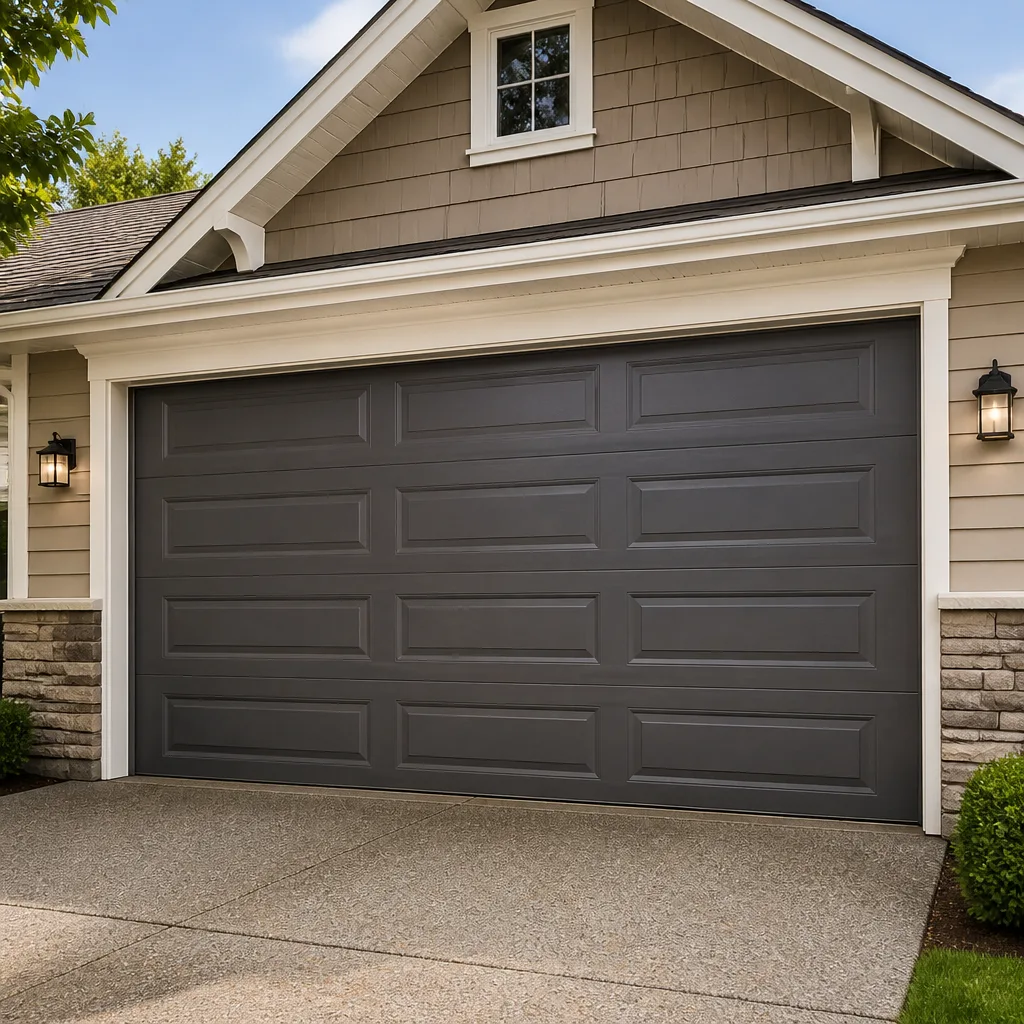 Raised-panel steel
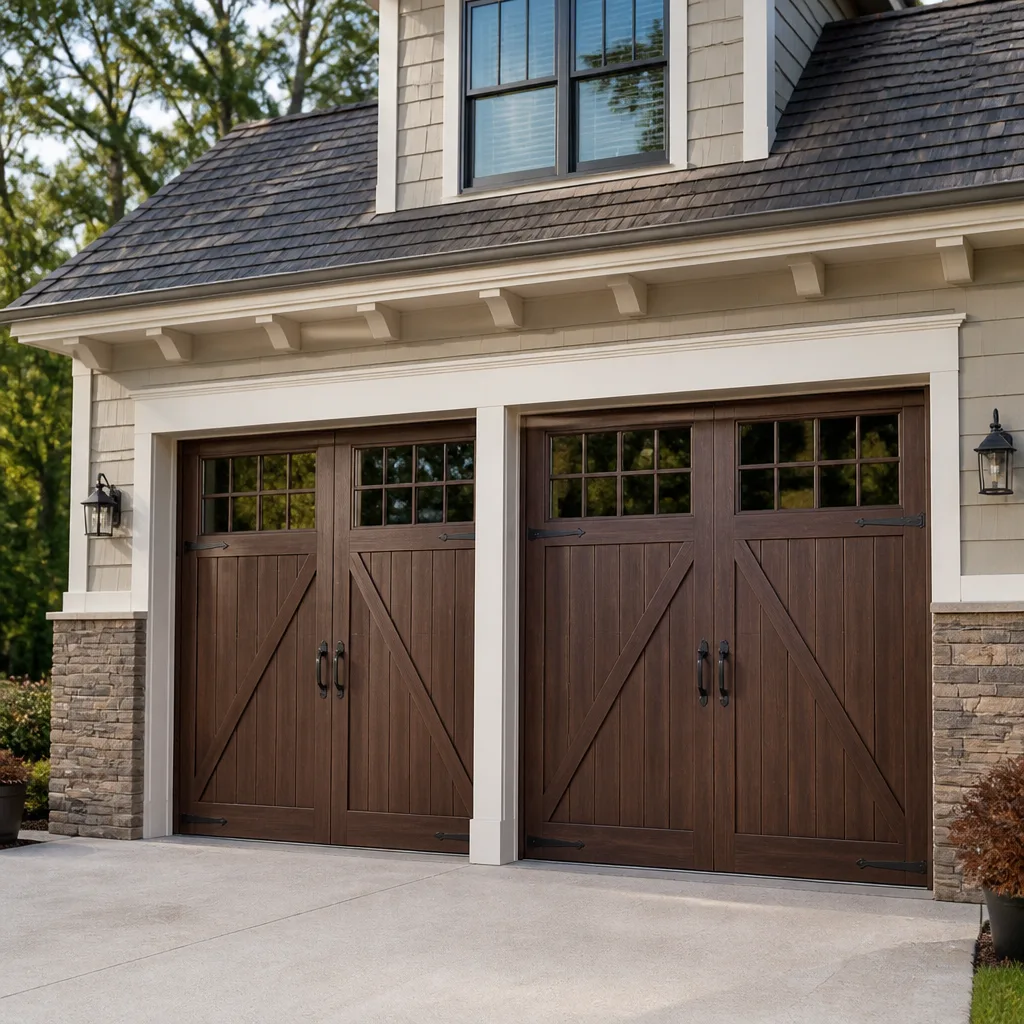 Carriage house
 Modern flush
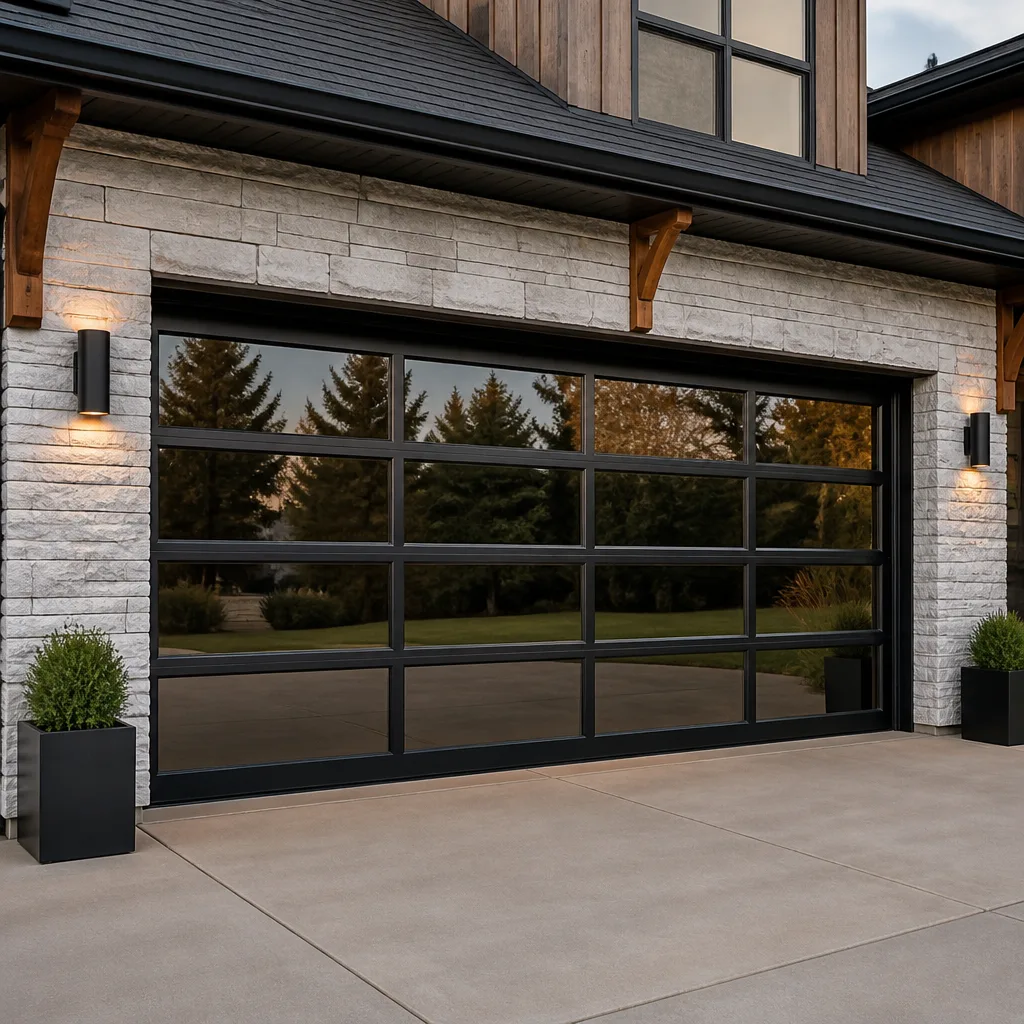 Full-view glass
 LiftMaster openers
 Chamberlain openers
Full 25-point door and opener safety check with every visit - springs, cables, rollers, tracks, and your LiftMaster or Chamberlain opener included
You get a price before we start. It does not change when the pro arrives.
Get your free estimateDIY vs Professional Garage Door: The Poinciana Homeowner’s Decision Guide
A loaded torsion spring looks completely still. No hum, no movement, no obvious danger. That stillness is the reason so many homeowners underestimate the job, because the tension stored inside a wound spring is holding the entire weight of the door, and it releases without warning when something goes wrong. The skill question is the wrong one to ask first. The better question is which tasks have failures you can recover from and which ones have failures you can’t. This guide breaks garage door work down task by task, weights true DIY cost against a professional visit, and gives you a clear line for Poinciana homeowners on what to touch and what to leave alone.
Quick Answer
Most garage door work splits cleanly into safe DIY tasks and tasks that should never be attempted by a homeowner. You can safely lubricate rollers and tracks, test the safety reverse, tighten brackets, replace a remote battery, and clean photo-eye lenses. Anything involving torsion springs, extension springs, the cables that run alongside them, or the high-voltage wiring inside a wall-mounted opener belongs to a trained technician. Spring and cable work accounts for the majority of serious garage door injuries, and the stored energy in a wound torsion spring can cause harm in under a second.
Styles & brands we work with
- Raised-panel steel
- Carriage house
- Modern flush
- Full-view glass
- LiftMaster openers
- Chamberlain openers
Table of Contents
- Why the DIY Question Is Really About Consequences, Not Skill
- The Task-by-Task Breakdown: What You Can Do vs What You Can’t
- Florida Rules, Insurance, and the Real Liability of DIY Spring Work
- The YouTube Problem: Why Torsion Springs Look Easy and Aren’t
- The True Cost of DIY: Tools, Retail Parts, and Your Time
- The Middle Path: Diagnosis and Prep Work That Lowers Your Bill
- Repair vs Replace: When a DIY-Avoided Job Signals Something Bigger
- When to Call a Professional
- Common Mistakes to Avoid
- Frequently Asked Questions
- The Bottom Line
Why the DIY Question Is Really About Consequences, Not Skill
There’s a moment in every garage door repair conversation where the homeowner says something like “I’m pretty handy, so I might just tackle it myself.” That’s a fair statement, and often true. Plenty of Poinciana homeowners can replace a light fixture, patch drywall, or swap out a bathroom faucet. The problem is that garages rarely punish mistakes the way plumbing or carpentry does. A bad faucet connection leaks. A bad spring adjustment can kill or permanently injure the person standing in front of it.
The useful question isn’t “am I capable of this.” It’s “if I get this wrong, what happens.” That reframing changes the math considerably.
Here’s how we break down garage door failures by consequence:
- Recoverable failures: A misaligned safety sensor, a remote that won’t pair, a track that’s slightly out of plumb, a squeaky roller. The door stops working, you notice, you call someone or you retry. Nothing is damaged beyond the door itself.
- Costly failures: An opener motor burned out from running a binding door, a bent track from forcing the door past a jam, a stripped gear in the opener housing. You pay more for repairs but you and your family stay safe.
- Dangerous failures: A wound torsion spring that slips its winding bar, a cable that snaps under load, a door that falls because the spring was carrying weight it wasn’t supposed to carry. These can cause serious injury or death in a fraction of a second, and there is no warning before it happens.
That third category is the one that matters most. It’s also the one most homeowners don’t fully see. A loaded torsion spring shows no visual clue that it’s carrying hundreds of pounds of tension. It sits there, still and quiet, looking like a simple metal coil on a pipe. There’s no visible gauge, no pressure reading, no obvious warning. That’s what we mean when we say most homeowners have no way to gauge the risk. The spring looks safe because the danger is invisible.
The path forward is practical, not paranoid. Plenty of garage door maintenance is completely safe for a homeowner in Poinciana to handle, and we’ll cover that step by step. But the work that touches springs, cables, or high-voltage wiring should go to a trained technician for the same reason nobody rewires their own electrical panel to save money. The stakes don’t match the savings.
The Task-by-Task Breakdown: What You Can Do vs What You Can’t
Here’s the clearest way to sort garage door work: separate tasks that touch stored mechanical energy or high voltage from tasks that don’t. That single rule breaks most of the confusion out.
Safe for a homeowner
- Lubricating hinges, rollers, and the torsion spring shaft: A light application of a garage-door-specific lubricant (not WD-40, which is a solvent, not a lubricant) reduces wear and noise. Safe to do while the door is closed and the springs are relaxed.
- Replacing remote batteries and reprogramming remotes: Follow the opener’s manual. Safe.
- Cleaning and aligning photo-eye sensors: The two small lenses near the bottom of the track. Wipe them clean with a dry cloth. If they’re misaligned, most can be nudged back into place by hand. Safe.
- Testing the safety reverse: Put a 2×4 flat on the ground under a closing door and confirm the door reverses on contact. Safe, and you should test it monthly.
- Tightening visible bracket bolts: Hand-tighten loose bolts on the door panels or hinges with a socket wrench. Stop if a bolt is stripping or the bracket is bending. Safe.
- Cleaning the tracks: A damp rag and mild detergent. Don’t lubricate the tracks themselves, but keeping them clear of debris is fine.
- Painting or refreshing a steel door with a compatible coating: Safe if done per the manufacturer’s paint specs. Clopay and Amarr both publish recommended coatings for their doors.
Professionally only
- Torsion spring replacement or adjustment: The single most dangerous garage door task. Requires specific winding bars and technique. Never DIY.
- Extension spring replacement: Slightly less dangerous than torsion, still requires proper safety cables and correct tension. Never DIY.
- Lift cable replacement: Cables hold the door in tension the same way springs do. A snapped cable whips under load. Never DIY.
- Bottom bracket and cable drum work: The bottom bracket carries the cable tension. Mishandling it can release the cable under load. Never DIY.
- Opener electrical wiring: Wall-mounted openers connect to 120V house wiring. Any work inside the opener housing that touches high voltage goes to a technician or an electrician.
- Track replacement or realignment on a heavily loaded door: Track work on a door with loaded springs risks releasing tension. Profesionally only.
- Panel replacement on a door with active springs: The door has to be secured and unloaded first to safely swap a panel. Not a solo job.
- Full door replacement: Logistics, spring sizing, opener matching, and anchoring all need coordination. Not a project to attempt on a Sunday.
The two-line rule
If you want a rule you can recite to a neighbor: anything that touches the spring, the cables, or the wiring inside the opener is a professional job. Everything else is yours if you want it. That single filter catches over 90% of the real risk in garage door repair. When in doubt, look at whether the door needs to be under live tension for the work. If yes, that’s technician territory.
We should also name the specific opener brands this matters for, because it’s not a generic issue. The modern WiFi-connected openers from LiftMaster and Chamberlain route low-voltage and high-voltage paths through the same housing, and Genie and Craftsman units have their own internal wiring conventions. If you’re considering swapping an opener control board or replacing a transformer, that’s inside the box. It belongs to garage door opener repair, not a weekend project.
Florida Rules, Insurance, and the Real Liability of DIY Spring Work
Florida doesn’t have a dedicated statewide licensing program for garage door installers the way some states do, but that doesn’t mean there are no rules. The regulations you’ll run into are local, and they’re real.
Most Florida municipalities require a permit for a full garage door replacement, and Poinciana’s permitting is handled through the county rather than a standalone city permitting office. Florida’s building codes do require residential garage doors to meet both wind-load requirements and impact-resistance standards in many parts of the state, and replacement doors must typically be labeled to confirm they meet the code in place at the time of install. The exact requirements vary by location, and the safest move is to ask your local building department directly about what your address requires before a replacement. That answer is part of what a written estimate should plan for.
Homeowner insurance angle
The insurance side is simpler but worth spelling out. Most homeowner policies cover garage door damage caused by a covered peril like wind or a vehicle impact. Policies are less friendly when the damage is traced to a homeowner’s own faulty repair attempt. If an improperly wound spring fails and drops the door on a car or person, the insurer is going to look closely at whether the repair was done by someone qualified, and some policies won’t cover damage that came from unpermitted or improper work. This isn’t a scare tactic; it’s a standard commercial insurance clause. The point is that insurance is there for the storm, not for the poorly installed spring.
Home inspector and buyer disclosure
If you ever sell the home, garage door condition is one of the items on a standard home inspection. An inspector who notes non-standard spring work or a door that doesn’t reverse on contact creates a sale problem for you later. Having a documented professional repair and a spring replacement tagged with the correct cycle rating avoids that headache. It’s the paper trail that saves you the money, not the initial repair.
For a job that touches structural and safety-critical components, the math doesn’t favor DIY. The professional is there to make sure the door still works, meets code, and doesn’t create a claim your insurer can decline.
The YouTube Problem: Why Torsion Springs Look Easy and Aren’t
Here’s a thing almost every homeowner has done: watch a 12-minute torsion spring replacement video, decide it looks doable, and order the winding bars. We understand the impulse. The video makes it look clean. A guy in a well-lit garage clamps two bars on the spring, moves them in careful turns, counts the rotations, and lifts the spring off the shaft. It’s edited. It has music. Nothing goes wrong.
What the video doesn’t show is why torsion spring work is dangerous even for someone who watched carefully.
What the video leaves out
- The tension is fully loaded before you touch anything. The spring is already wound to the exact tension the door needs. The moment you place a winding bar, you’re holding that tension with a 12-inch rod. If the bar slips or the spring catches, the bar swings free at head height.
- The bar itself is the danger, not the spring. A 1/2-inch solid steel bar rotating under spring tension can shatter a window, break a jaw, or put a hole in a wall. When the winding bar slips, it doesn’t slip gently.
- Spring count and size must match the door exactly. A torsion spring is engineered for the exact weight and height of the door it carries. If you buy the wrong spring, the door may work for a few cycles and then fail. A Clopay or Amarr door’s specific weight and geometry determines what spring it needs, and getting it wrong is a safety problem, not a cosmetic one.
- You can’t test your work safely. A trained technician knows how to test a spring under a proper enclosure, with both hands clear and specific tools to catch the bar. A homeowner’s first test is often when the door is cycled with people nearby.
- Removal of the old spring is harder than installation of the new one. Videos invariably show a clean spring releasing tension smoothly. Old, rusted, or snapped springs don’t unwind cleanly, and a snapped spring can shift on the shaft unexpectedly during removal.
Why Poinciana specifically makes it worse
The climate here makes the metal cycle faster than many installation guides assume. Central Florida’s heat and humidity wear on the metal and the lubricant that protects it, and the constant use on a door that runs several times a day adds up. That’s actually why a spring that should last a certain number of cycles may fail sooner than the cycle rating suggests, and it’s why we recommend testing the door monthly. It’s also why a failed spring in Poinciana is often a spring that’s been quietly weakening for months, not one that snapped without warning.
When you see a snapped spring, the safe move is to call for garage door spring repair. Do not try to open the door with a manual release if the spring is broken, because the door is now unsupported and can fall. Call us and we’ll set a same-day appointment to inspect, replace, and re-balance the door correctly.
We don’t say this to diminish anyone’s skill. We say it because the downside of getting torsion spring work wrong isn’t a leaky pipe or a crooked shelf. It’s a hospital trip. The math is straightforward: the savings on a spring repair is a few hundred dollars. The cost of an emergency room visit and a damaged door is much higher.
The True Cost of DIY: Tools, Retail Parts, and Your Time
DIY math usually looks simpler than it is. The parts cost is the part everyone calculates, but there are three other costs that are usually left out. Here’s what a realistic comparison of DIY vs professional garage door repair in Poinciana looks like when you run all four lines.
The four lines of DIY cost
- Tools you don’t own yet: For torsion spring work, that’s a pair of proper winding bars (not screwdrivers, which is what gets people hurt), a spring scale, a socket set, and safety glasses. If you don’t have these already, that’s an upfront cost you can’t recover.
- Retail parts markup: Springs, cables, and rollers bought at retail cost more than what a service technician pays for the same part. That gap is real and wider than people expect.
- Time at your own hourly rate: A spring replacement is a 2-to-3-hour job for someone doing it for the first time with the right tools. That’s a half a day you’re not doing something else. A trained technician typically completes the same job and leaves the door tested and verified.
- The cost of a failed DIY attempt: If the spring isn’t sized correctly, or the door isn’t re-balanced, or a winding bar slips and bends the shaft, the second repair is more expensive than the original job would have been. This is the hidden cost of DIY that videos never mention.
How it compares
A repair quoted by a professional is set by the written estimate for that specific job. We can’t tell you a “typical” price in Poinciana without seeing the door, the spring count, and the door weight, because those vary so much that any number would mislead you. What we can tell you is that a written estimate covers the parts, labor, and testing, and it’s set before the work starts. If you call us for a free estimate, you get a real number for your door.
The middle path: tasks that lower your bill
There’s a middle way between DIY and handing the whole job to a technician, and it’s underused. If you’re comfortable doing so, some prep work can reduce the time a technician spends on your job and, on some jobs, that reflects in the estimate. Here’s what’s safe to do before the appointment:
- Clear the floor around the door so the technician has full access.
- Test and note the door’s behavior in each direction and write it down (does it stall at a certain height, does the opener reverse, does the door bounce on close).
- Record the model number on the opener housing and the brand on the door itself (Clopay, Amarr, and Wayne Dalton doors usually have their manufacturer label on the inside of the bottom panel).
- Disconnect and move vehicles parked under or around the door.
- Photograph any visible damage: a snapped spring, a bent track, a frayed cable.
None of that touches live tension. None of it risks injury. But every item on that list saves the technician time on-site, and time saved is one of the variables that can go into a fair estimate.
The Middle Path: Diagnosis and Prep Work That Lowers Your Bill
We see two kinds of homeowners call us. One has done nothing and needs a full diagnosis on arrival. The other has done the safe prep work and hands the technician a clear problem description the moment they arrive. The second call is usually faster, and often cheaper, because the technician spends less time on-site confirming what’s wrong and more time fixing it.
The safe prep work falls into three buckets.
1. Observe before you call
Walk the door through one full open and close and describe the behavior precisely. “It stops about a foot off the ground and reverses” is worth ten minutes of technician time. “It’s broken” is not. Note the exact point in the cycle where the door behaves oddly, whether the opener light flashes in a pattern, and whether the door moves at the same speed both directions. These are the diagnostic details that separate a quick fix from a long appointment.
2. Identify your equipment
The manufacturer label on the inside of the bottom door panel tells you the brand and model, and the opener housing has a similar sticker. Clopay, Amarr, Wayne Dalton, and Craftsman all use slightly different spring configurations and opener protocols, and a technician who knows what brand and model they’re working on can show up with the right parts already loaded.
3. Photograph the failure
A clear photo of a snapped spring, a bent track, or a frayed cable lets us plan the repair before the appointment. It also means the estimate is more accurate the first time. If the photo shows something unexpected (a two-spring setup when you assumed one, or a non-standard mount), we can adjust the plan before we arrive.
What’s not on this list? Touching the spring, the cables, or the opener internals. Diagnosis doesn’t require any of that. If you’re not sure whether something counts as observation or touching, assume it needs a call. We’re happy to walk you through what’s safe to check when you call in.
If you do want the door looked at by a technician, that visit starts with garage door repair and we can quote the repair before any work starts.
Repair vs Replace: When a DIY-Avoided Job Signals Something Bigger
Sometimes the decision to call a professional isn’t about a single repair; it’s about the door itself. A door that’s 15 to 20 years old with a single spring that’s already been replaced once is telling you something. A door that’s been through two spring replacements in three years is telling you the door weight and spring cycling are out of balance, which means the next repair will fail the same way. In that case the fix isn’t another spring; it’s a new door that’s properly engineered for the space.
Here’s how we’d sort it in a Poinciana home:
- Repair makes sense if the door is under 12 years old, the panels are intact, the opener is current, and only one component failed. Replacing a single spring or a single opener usually costs less than a new door.
- Replacement starts making sense if the panels are cracked or rusting along the bottom edge (common in homes where the bottom panel takes the ground heat), if a spring has already been replaced once and failed again, or if the opener is an older chain-drive that no longer has safety reverse. A new door is often the better long-term call.
- Replacement definitely makes sense if the door doesn’t meet current wind or impact requirements for the area or the panel design can’t be matched anymore.
Because we carry and service the major brands, we can service the door you have or provide a new one in the same visit cycle. That matters because a homeowner with a mixed brand situation, say a Wayne Dalton door with a Genie opener, doesn’t need two companies.
The same logic applies to openers. A LiftMaster or Chamberlain opener with a failing logic board can sometimes be repaired. A Craftsman opener past a certain age becomes harder to source parts for, and that’s the moment to consider replacement rather than another repair. We work on all four of the dominant opener brands, so the conversation stays specific to what’s actually in your garage.
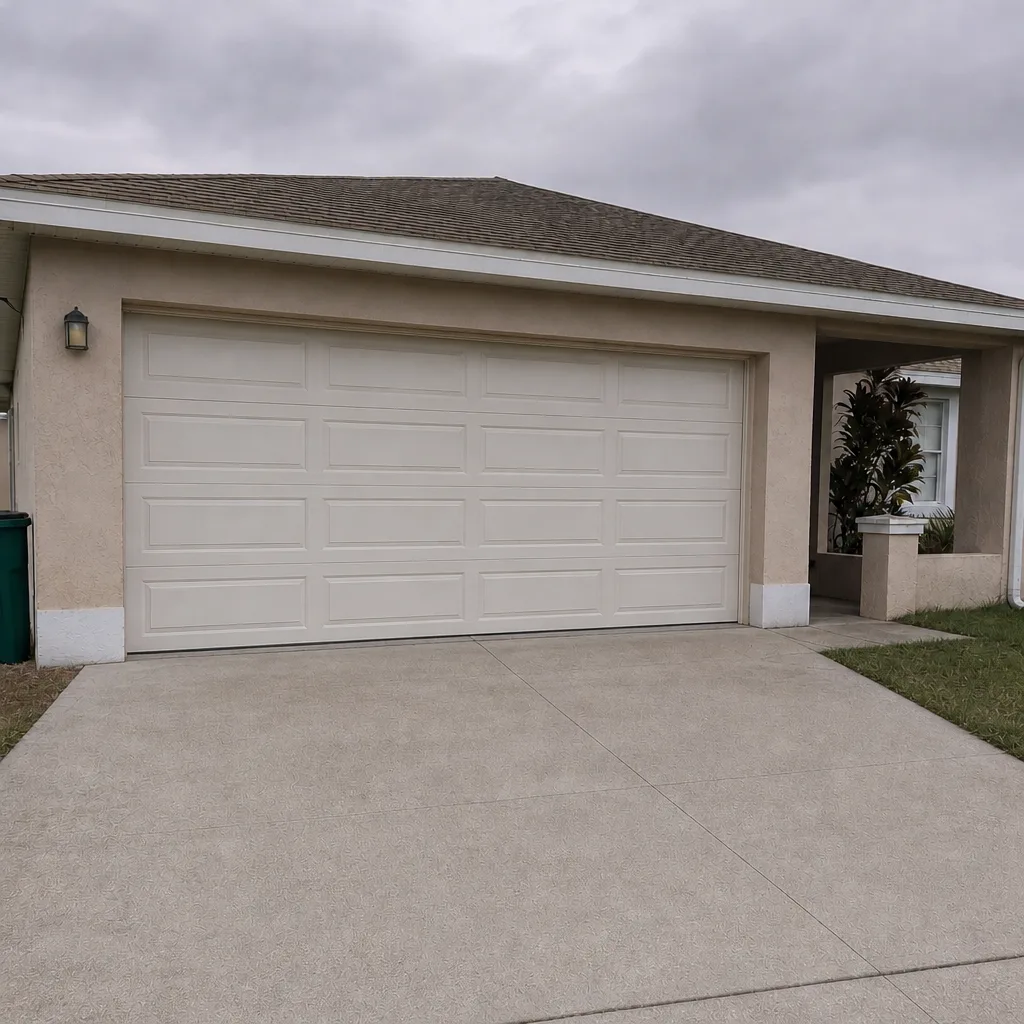
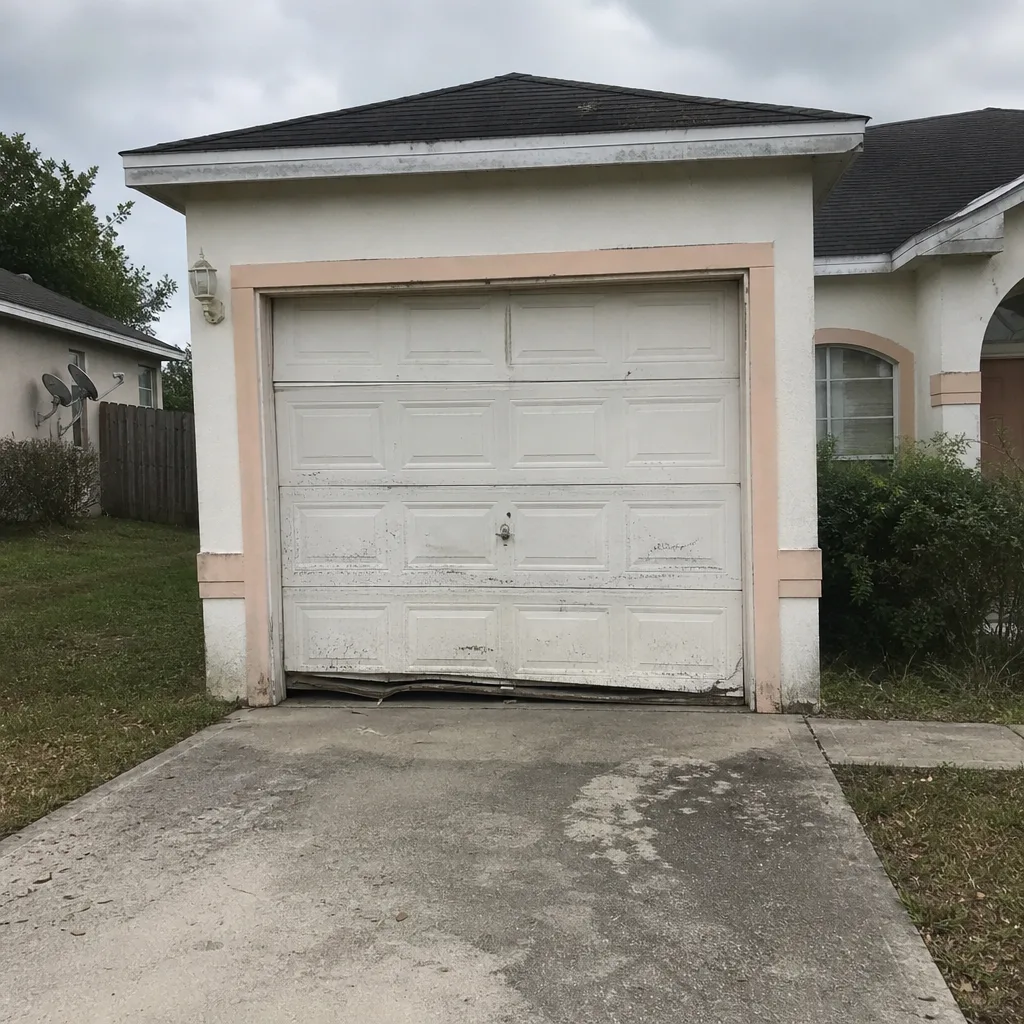
See the difference
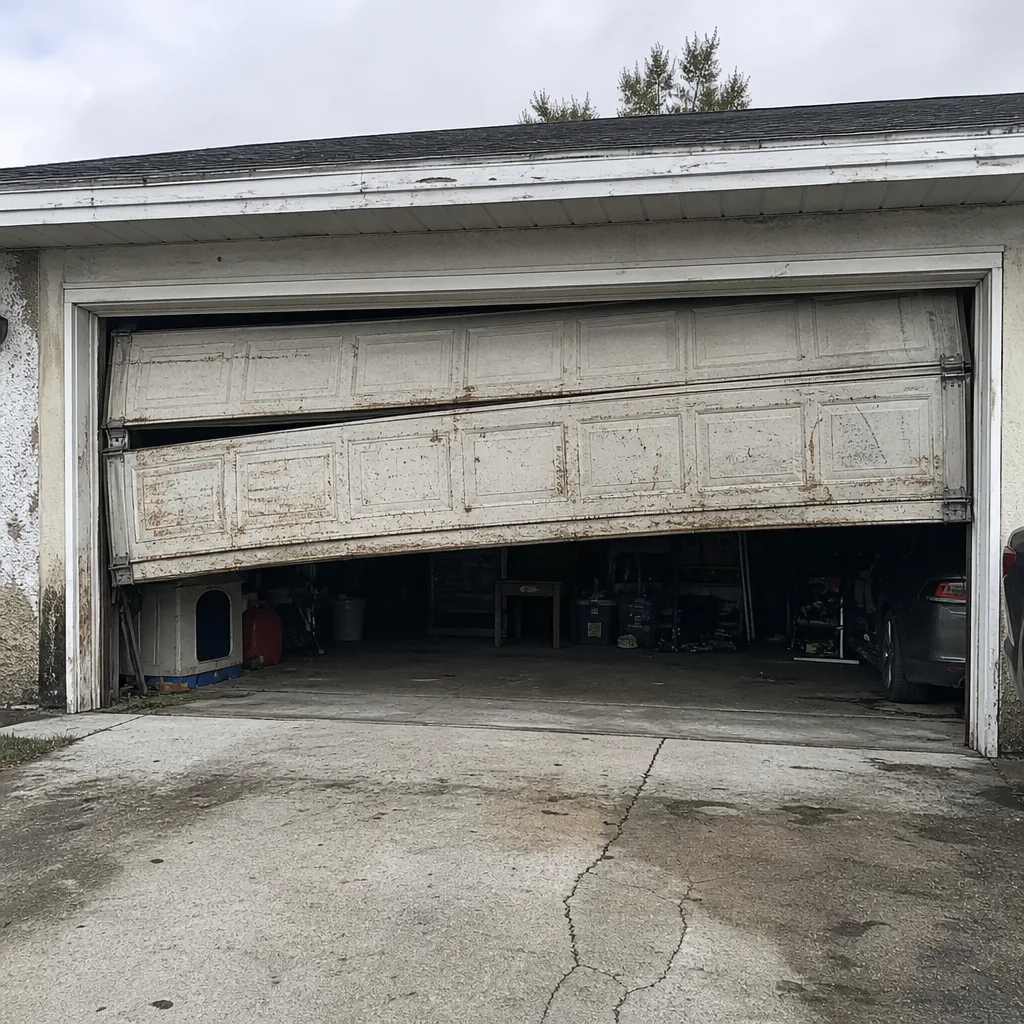 Before
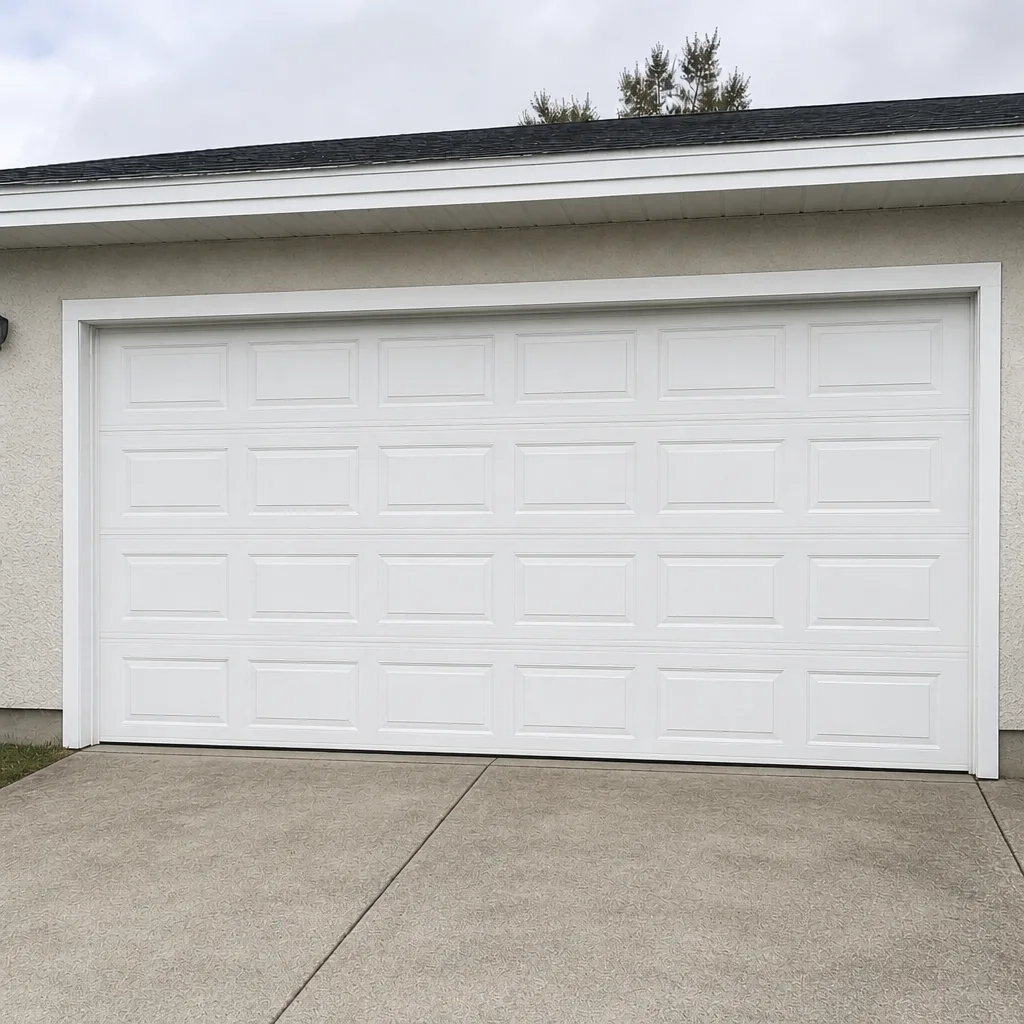 After
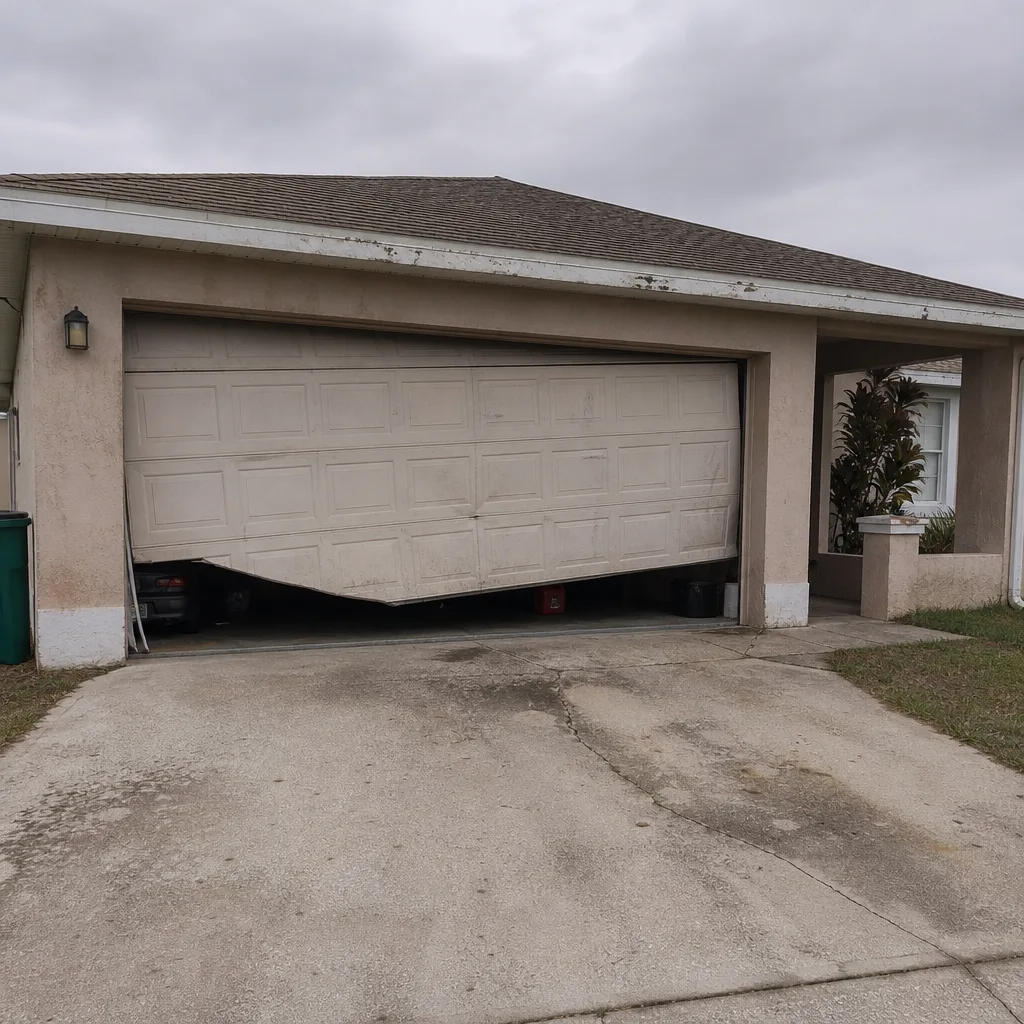 Before
 After
 Before
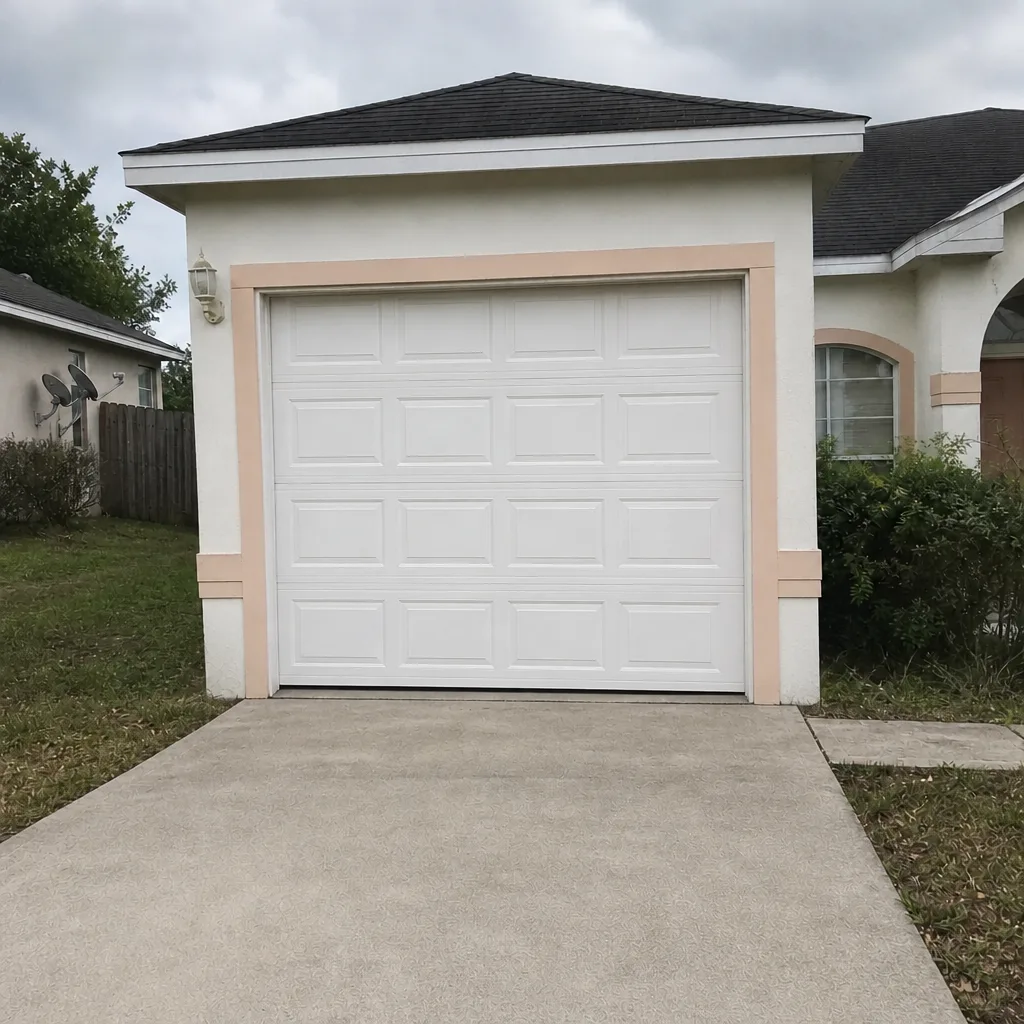 After
Common Mistakes to Avoid
- Assuming a wound spring is safe because it’s still. Its stillness says nothing about tension. Anything that touches it belongs to a technician.
- Using screwdrivers as winding bars. Screwdriver shafts are not rated for the load of a torsion spring and can snap or bend under pressure. This is the most common shortcut that turns a manageable job into a hospital visit.
- Buying the wrong spring size online. Springs are sold by weight and height. A drop-in replacement must match the exact weight of the door or the door will fail again, and the failure can be worse the second time.
- Forcing the door after a spring snaps. When the spring lets go, the door is no longer counterbalanced and the full weight drops onto the opener and the person pushing. Leave the door in the down position and call.
- Ignoring the monthly safety reverse test. A door with a working spring but a failed safety reverse is a liability in any household with children or pets. Test it once a month.
- Replacing the opener when the real problem is the spring. A sluggish opener on a door with a worn spring is fighting a heavier door than it should. Replacing the opener on a door with a failing spring burns out the new opener.
- Skipping the permit on door replacement. Ask your local building department before installing a replacement door. Unpermitted work complicates a future sale and can complicate insurance.
When to Call a Professional
Call a professional in any of these situations: a snapped or visibly distorted spring; a door that will not stay in the up position or slams down; a cable that has come off its drum; an opener that hums but doesn’t move the door; a door that reverses partway through each cycle; a door that has come off one of its tracks; any electrical work inside the opener housing; or any full door replacement. In each case the failure involves stored energy, structural integrity, or high voltage, and none of those have a safe homeowner workaround.
We also want to be clear about the phone call itself. Poinciana Garage Door Repair Pros offers free estimates in Poinciana. Call (866) 890-9418 and we’ll ask two or three questions to describe the failure, give you a real estimate before any work begins, and set a same-day appointment when the situation calls for it. We work on virtually any system already in your home, from Clopay and Amarr doors to LiftMaster, Chamberlain, Genie, and Craftsman openers, and we’re equipped to handle emergency situations like a door stuck open or a spring that’s trapping a car. When the repair turns out to be a replacement, we handle that side of the job as well. Same team, from first call to final test.
Frequently Asked Questions
No. Torsion and extension springs store enough energy to cause serious injury in under a second, and replacing one requires proper winding bars, correct spring sizing, and safe removal technique that isn’t safe for a homeowner. Call (866) 890-9418 for a same-day spring repair appointment; estimates are free.
You can safely lubricate hinges and rollers, replace remote batteries, clean and align photo-eye sensors, tighten loose bracket bolts, and test the safety reverse monthly. Anything that touches a spring, a lift cable, the bottom bracket, or the wiring inside the opener should go to a trained technician.
Usually not. Most policies cover a covered peril like a wind or impact event; they are less likely to cover damage caused by an improper homeowner repair, and some policies decline unpermitted work outright. If a spring or door failure damages a vehicle or the home, the insurer will look at whether the repair was professionally done. A documented professional repair avoids that question entirely. Call (866) 890-9418 for a free estimate before starting any spring work.
Repair usually makes sense if the door is under roughly 12 years old, the panels are intact, and only one component has failed. Replacement becomes the better call when the panels are cracked or rusting, when a spring has already been replaced and failed again, or when the door doesn’t meet current wind or impact requirements for the area. Call (866) 890-9418 with your door’s brand and model, and we can help you sort between the two before anyone comes out.
A professional estimate covers the inspection, the parts and labor for the specific repair, and post-repair testing of the door’s balance and safety reverse. The price is set by the written estimate before any work begins, so if the door turns out to need something different from what you described, you’ll see the revised number before you approve it. Call (866) 890-9418 for a free estimate.
Most Florida municipalities require a permit for a full garage door replacement, and wind-load and impact-resistance requirements vary by location. Poinciana’s permitting runs through the county. Call your local building department to confirm what your address requires before the new door goes in, and factor that into the estimate. For help identifying the door you have, call (866) 890-9418; we’ll work with your brand.
The Bottom Line
Garage door repair doesn’t split cleanly between “DIY” and “professional.” It splits between tasks that have recoverable failures and tasks that have dangerous ones. You can safely lubricate, clean, test, and photograph your door, and that prep work can help the estimate land lower than it would otherwise. You cannot safely touch the spring, the cables, the bottom bracket, or the high-voltage wiring inside the opener, and trying costs more, not less, once you factor in tools, retail markup, and the real risk of an injury. In Poinciana’s climate the metal fatigue cycle runs faster than many installation guides assume, so a spring that looks fine one month may be quietly failing the next. We work on virtually any door and opener brand, from Clopay, Amarr, Wayne Dalton, and Craftsman to LiftMaster, Chamberlain, Genie, and Raynor. If you’re stuck between repair and replacement, or if you’ve already been told one thing and want a second estimate, call (866) 890-9418. Free estimates, and we’ll walk you through the door before any work starts.
For the full set of services we offer and to check a model against what’s in your garage, visit Poinciana Garage Door Repair Pros.
Written by the team at Poinciana Garage Door Repair Pros.