
Last updated November 21, 2026
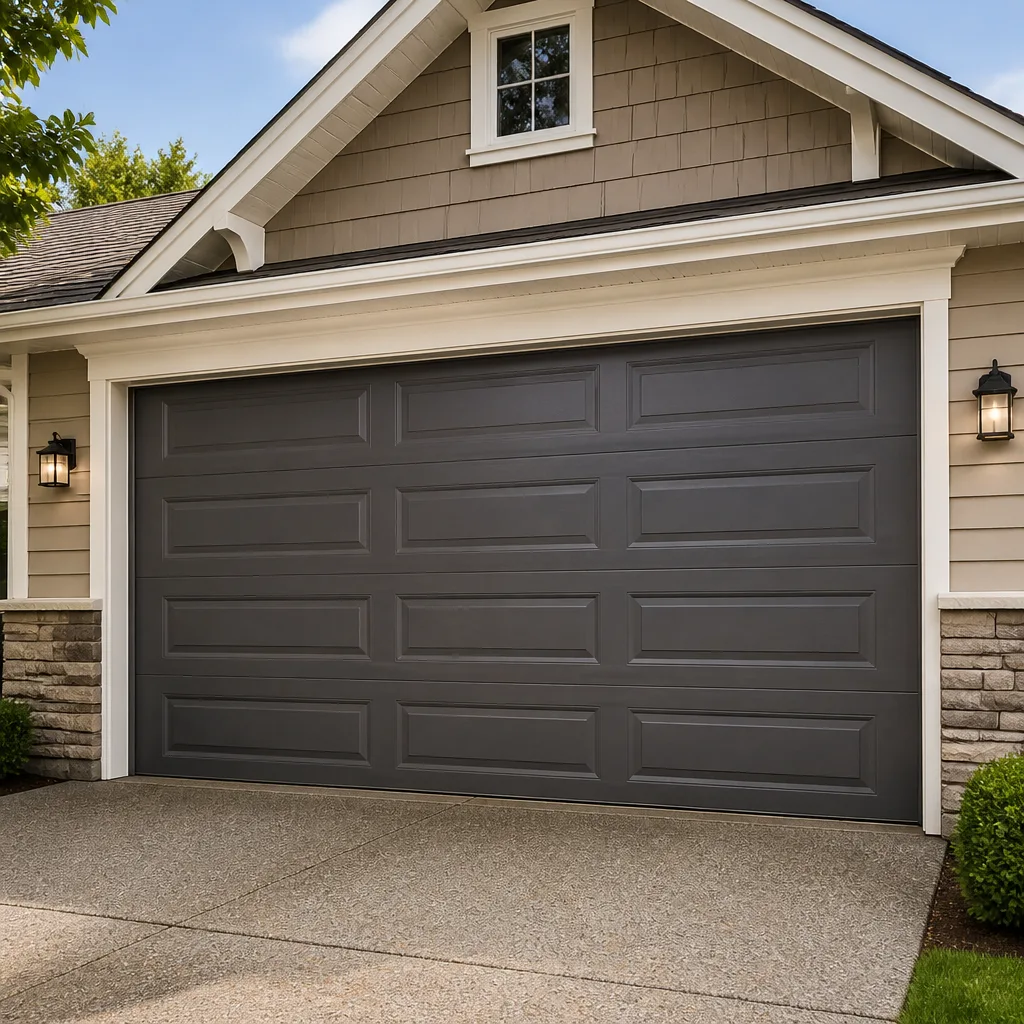 Raised-panel steel
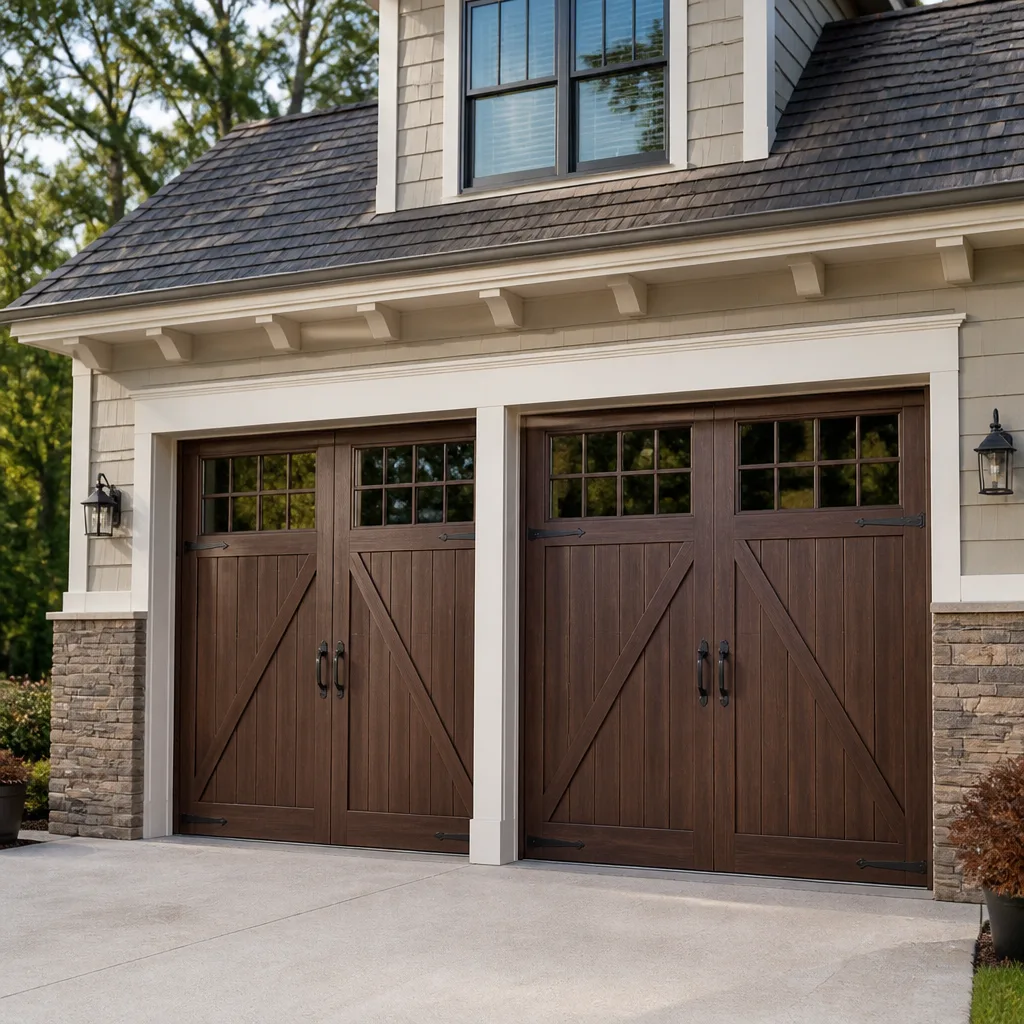 Carriage house
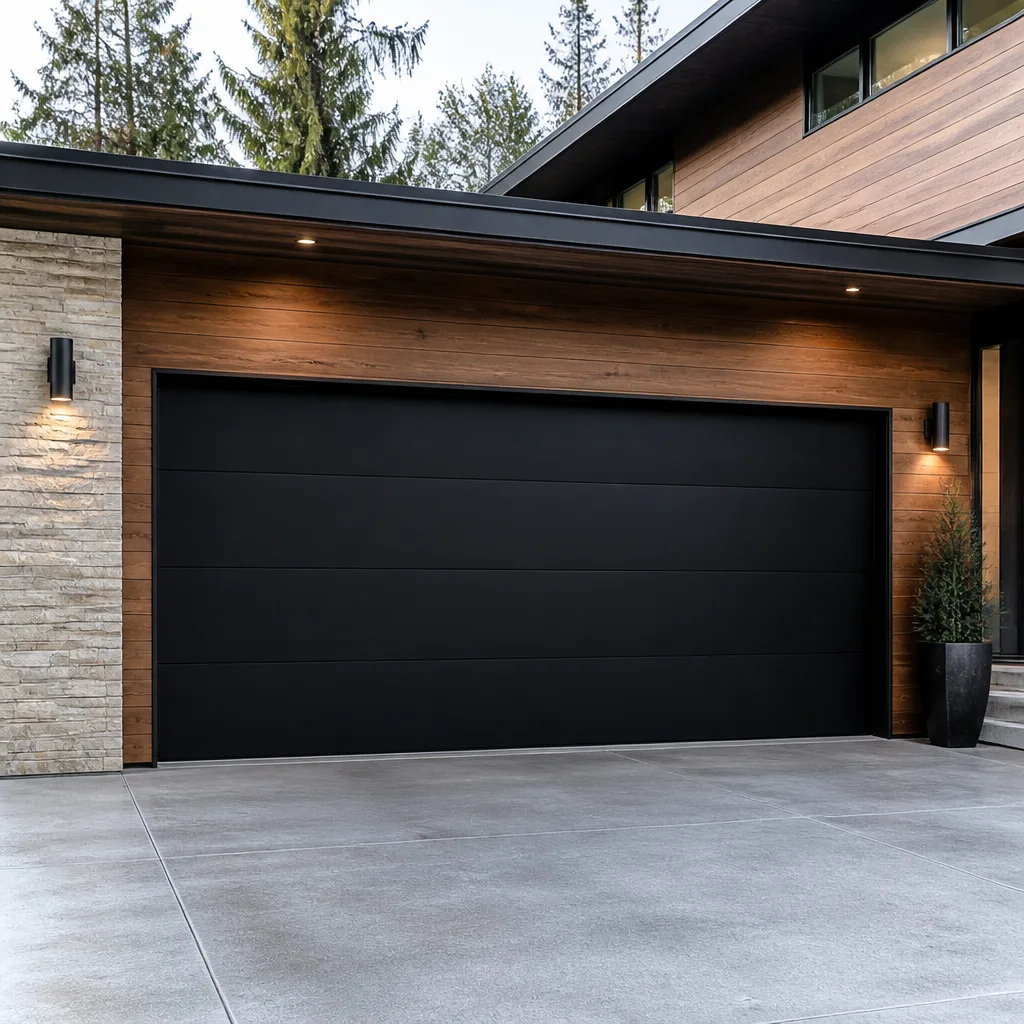 Modern flush
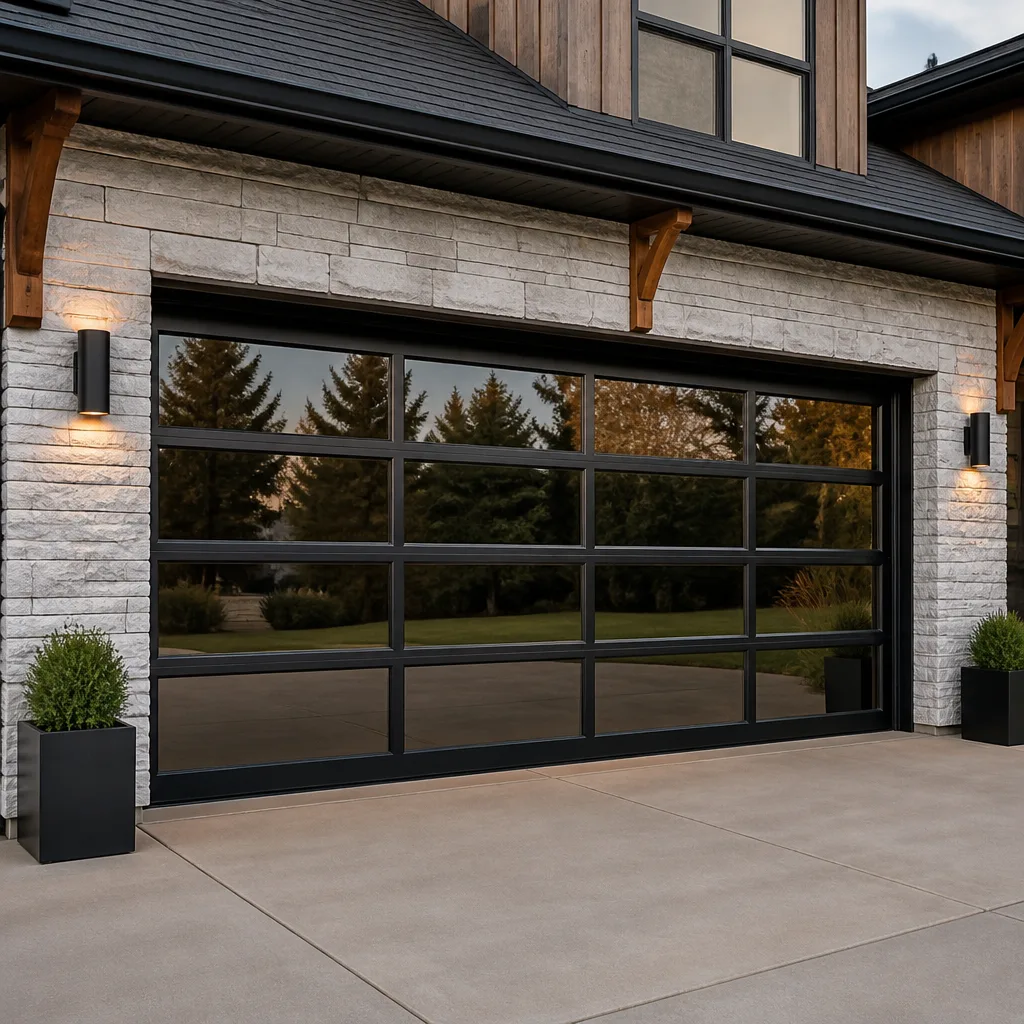 Full-view glass
 LiftMaster openers
 Chamberlain openers
Full 25-point door and opener safety check with every visit - springs, cables, rollers, tracks, and your LiftMaster or Chamberlain opener included
You get a price before we start. It does not change when the pro arrives.
Get your free estimateSeasonal Garage Door Care for Poinciana: Year-Round Homeowner’s Guide
Most seasonal garage door guides assume a place with four distinct seasons. Poinciana doesn’t have those. What we have instead is a long dry season, a hurricane season that runs from June 1 through the end of November, and the punishing transition weeks on either side of both. Each phase stresses your door, springs, opener and weatherstripping in a different way, and the failure you discover during a storm usually started weeks or months earlier, during a stretch of weather when nobody was thinking about the garage. This guide walks through what to inspect and when, so you’re working with the calendar instead of reacting to it. It’s written from Poinciana, for homes that run their door every single day.
Quick Answer
Seasonal garage door care in Poinciana means checking three things before June 1 (springs and cables, panel and track condition, and weatherstripping), inspecting for hidden damage after any named storm before running the door, and testing the manual release and reverse function every November when storm-season memory starts to fade. The dry season is when small seal and panel-gap problems quietly develop, so the pre-season check catches them while the repair is still small.
Styles & brands we work with
- Raised-panel steel
- Carriage house
- Modern flush
- Full-view glass
- LiftMaster openers
- Chamberlain openers
Table of Contents
- Why Poinciana’s Calendar Is Three Seasons, Not Four
- The Dry Season: What Develops While You’re Not Looking
- Your Pre-Hurricane Season Checklist Before June 1
- How Afternoon Heat Cycles Affect Springs and Openers
- Post-Storm Inspection: Before You Press the Button
- The November Task: Testing Manual Override
- The Transition Weeks Nobody Plans For
- A Simple Year-Round Care Calendar
Why Poinciana’s Calendar Is Three Seasons, Not Four
Poinciana sits in central Florida, well inland from both coasts, and that inland position shapes the weather pattern more than most homeowners realize. The dry season runs through the winter and early spring, when humidity drops and afternoons stay comfortable. Hurricane season arrives June 1 and doesn’t end until November 30, and the middle of it brings daily afternoon storms that build up inland rather than blowing in off a coast. Between the two, there are transition weeks on both ends where the pattern hasn’t settled and anything can happen.
That inland location matters for garage doors specifically. Without a coastal breeze or a marine influence, mid-afternoon heat builds and holds, and the door sits on a west- or south-facing wall baking through it. Homes across Poinciana – in communities like Solivita, Bellalago, and the neighborhoods off Pleasant Hill Road – tend to face the same general pattern, and the seasonal care that actually matters here follows that pattern, not a generic spring-and-fall schedule.
What does that mean for your garage door? It means the checks that matter most are timed around hurricane season, not around autumn maintenance. It means the dry season is the quiet window when slow degradation happens that you won’t notice until it fails. And it means the weeks after a storm are when you need to be careful about a door that might be structurally compromised but that still looks normal from the outside.
What Each Phase Stresses
- Dry season (roughly November – April): low humidity pulls at weatherstripping and panel gaps, dries out wood doors, and lets hinges and rollers run dry. Small problems develop quietly.
- Transition weeks (May and late November): sudden humidity swings and temperature shifts intensify, and doors that were fine a month ago start to bind, squeal or reverse erratically.
- Hurricane season (June 1 – November 30): wind-driven rain pushes against seals, heat cycles stress torsion springs and opener motors, and power outages make the manual release the thing that matters most.
Once you see the year as three phases instead of four, the seasonal maintenance list becomes much shorter and much more targeted. The rest of this guide breaks each phase down.
The Dry Season: What Develops While You’re Not Looking
The dry season is when most garage door problems in Poinciana are quietly getting started, and it’s also the stretch when almost nobody schedules a check. The humidity drops for weeks at a time, and that drop changes how the materials in your door behave.
Start with the weatherstripping. The rubber or vinyl seal along the bottom of the door and the perimeter gaskets around the frame are the parts most affected by dry air. They can dry out, stiffen, and shrink slightly, opening gaps you won’t notice until the first hard rain pushes water into the garage. On a wood or wood-frame door, the dry months pull at panel gaps and can open hairline cracks in the panels themselves. Those cracks don’t look serious in April. They can become real structural concerns once a storm pushes against them.
Hinges and rollers are the other slow-developing problem. Dry air lets the factory lubricant migrate away, and a hinge or roller that runs quietly in December starts to squeal and drag by March. Left alone, that drag puts extra load on the opener motor and the torsion springs, which is exactly the wrong thing going into hurricane season.
Dry Season Inspection Steps
- Run your hand along the bottom seal. It should feel supple and compress when pressed. If it feels stiff, cracked or brittle, it needs replacing before storm season.
- Check the perimeter gaskets around the door opening – anywhere you can see daylight through a closed door is a gap that storm-driven rain can follow.
- Walk the door with a flashlight and look for hairline cracks, especially on wood or wood-composite panels. Note anything you find and have it looked at.
- Listen while the door runs. Squeals, pops or a dragging sound at any point in travel mean a hinge or roller has lost lubrication or worn.
- Look at the panels themselves from inside the garage with the door closed, checking for sag or separation at the seams.
None of this requires tools or climbing. It’s a twenty-minute visual walk that catches the small problems while they’re still small. If a hinge or roller is worn, that’s routine maintenance; if a wood panel is cracking, that deserves a professional look because the panel’s strength matters during a storm.
Your Pre-Hurricane Season Checklist Before June 1
The single most useful window for garage door care in Poinciana is the weeks before June 1, before hurricane season starts. This is when the dry-season problems you found can be fixed, when seals can be replaced, and when a professional can look at the load-bearing parts before wind-driven weather puts them to the test. Waiting until a storm is named is too late to schedule a real inspection.
Here’s the pre-season checklist we recommend, roughly in priority order:
1. Have the springs and cables inspected by a trained technician
Torsion springs and the cables that run through them carry the entire weight of the door. They wear inside, not on the surface, so a visual check tells you very little. Only a trained technician can measure load and check for the tell-tale signs of a spring that’s been overstressed by a summer’s worth of heat cycles. Springs are the most dangerous part of a garage door: the tension in a wound spring can seriously injure or kill, and there’s no safe way to check them yourself. Leave this to a professional.
2. Confirm the door operates evenly and the tracks are straight
Watch the door on its way up and down. It should move smoothly, with no binding on one side, no wobble, and no point where it slows or hangs. If a track has been knocked out of alignment (or bent in an earlier storm), the door loads unevenly and can come off the track under stress. Track straightening during the dry season is cheap compared to dealing with it in a storm.
3. Replace any worn weatherstripping
Bottom seals and perimeter gaskets are the door’s first defense against wind-driven rain. If they’re stiff, cracked or compressed flat, replace them before June 1. A storm doesn’t need a hurricane to soak your garage – a strong summer afternoon storm will find any gap.
4. Test the opener’s safety reverse
Each opener brand has its own procedure, but the goal is the same: confirm the door reverses when it detects an obstruction at the bottom of travel. LiftMaster, Chamberlain, Genie and Raynor openers all use slightly different mechanisms, and we work on all of them. If the reverse function doesn’t work, that’s a safety issue, not a maintenance item.
5. Photograph the door and document its condition
Take clear photos of the full door, both tracks, the opener, and the springs from a few angles. Keep them somewhere you’ll find them. If a storm causes damage, having a “before” record helps you and your insurer understand what changed. This step takes five minutes and it’s the one most people skip.
6. Check the opener’s backup battery
If your opener has a battery backup, test it now, not when the power goes out. Openers from LiftMaster, Chamberlain, Genie and Raynor that support backup batteries rely on them during a storm-related power outage, and a dead backup means you’re manually lifting the door.
How Afternoon Heat Cycles Affect Springs and Openers
The daily cycle of intense heat and cooling that builds up inland through a Poinciana summer is hard on two specific components: the torsion spring system and the opener motor. Understanding how heat affects them tells you when to worry and when not to.
Torsion springs are tuned to a specific load. As the day heats up, the metal coil expands slightly and the wire slackens a touch; as evening cooling brings it back, the tension returns. Under ideal conditions the change is small. But a spring that’s already stressed by age and a summer’s worth of heat cycles can lose tension unevenly, and that’s why doors often start to feel “heavy” or unbalanced right before a spring fails. If your door has started to feel noticeably harder to lift by hand, or if the opener seems to be working harder than it used to, that’s your indicator to have the springs measured.
The opener motor faces its own heat-related load. During the hottest part of the day, the motor and internal components run warmer than in cooler weather, and a motor that’s already under strain from a dragging door is going to run warmer still. Some openers will overheat and shut themselves off during heavy use on a hot afternoon. Modern smart openers from LiftMaster and Chamberlain have thermal protections built in, but a failing opener that trips repeatedly during hot afternoon use is telling you something is wrong.
What to Watch for During the Hot Months
- Door feels heavier than it did last summer. Springs are the usual culprit; have them checked before the door becomes an emergency.
- Opener trips off or reverses repeatedly during hot afternoon use. Overheating, an overloaded motor, or a failing safety reverse.
- Motor sounds harsher or runs longer. Could be heat, could be a dragging door. Either way it needs a diagnosis.
- Door fails to close fully in the heat. Often a spring tension issue that shows up when the coil is at its hottest.
If any of these show up in July or August, don’t wait for storm season to be over. Repair work is simpler and cheaper while the door is still working than once it has stopped. For a full rundown of the diagnostic side, see our garage door repair service page.
Post-Storm Inspection: Before You Press the Button
This is the one rule we’d put on every garage door in Poinciana: after any named storm, inspect the door before you operate it. A door that looks fine from the outside can have a bent track, a partially dislodged roller, or a spring that’s lost partial tension. Pressing the opener button on a structurally compromised door can send it off the track or cause a failure that’s much worse than the original damage.
Step-by-Step Post-Storm Inspection
- Look before you touch. From outside the garage, check the door panels for dents, separations, or panels that have visibly shifted. If a panel has separated or the door looks structurally compromised, don’t touch it – call a professional.
- Check the tracks by eye. Both vertical and horizontal tracks should be straight and parallel. Any noticeable bend, kink or detachment means a professional inspection before operation.
- Look for debris on the tracks or between panels. Even a small piece of storm debris can jam the door or cause a roller to derail.
- Do not press the opener button yet. If any part of the door looks off, stop here.
- If the door looks intact, disengage the opener (pull the release cord once, carefully) and lift the door manually a few inches. It should feel smooth and light. If it feels heavy, binding, or uneven, don’t force it.
- Watch a full manual cycle before re-engaging the opener. Then run it once with the opener and confirm it moves smoothly, evenly and reverses correctly.
The care in that list is the point. A door that has been hit by wind-driven rain, blown debris or a shifted vehicle is a “maybe” until you inspect it. If anything about the door feels wrong, that’s when to call. Poinciana Garage Door Repair Pros offers emergency garage door service for exactly this situation – a door stuck open after a storm, a spring that let go, a door off its track – and we answer the phone 24/7, with fast dispatch from 7am to 7pm, Sunday through Friday. Emergency service is available because a door that won’t close is a house with a hole in it.
The November Task: Testing Manual Override
Every garage door has a manual release – usually a cord hanging from the opener trolley, or a lever on a side-mount opener. When the power goes out during a storm, that release is how you open the door by hand. It’s the single most important safety part on your system that you almost never use, and it’s the one most likely to fail quietly when you actually need it.
The manual release mechanism develops problems slowly, during the dry months when you’re not thinking about storms. Cords can fray, the trolley can stick, the release lever can seize, and the spring-loaded mechanism can lose its free movement. All of that happens invisibly while the door is running normally on the opener.
That’s why we recommend testing manual override every November. The timing is deliberate. By November, storm season is winding down, the memory of summer outages is fading, and the dry season is starting. Testing in November gives you a full dry-season window to fix whatever you find, before the next storm season.
How to Test Manual Override Safely
- Start with the door closed and the opener engaged.
- Stand clear of the door’s travel path, then pull the release cord once, firmly but without yanking. The opener trolley should disengage from the door carriage with a clear “click.”
- Lift the door manually a foot or so. It should be firm but manageable. On a properly balanced door you should be able to control it easily with one hand; on an unbalanced or spring-stressed door it will feel much heavier. That heaviness is itself a signal to have the springs checked.
- Lower the door gently and re-engage the opener. The trolley should re-engage cleanly when you run the opener.
- Inspect the cord and mechanism. A frayed cord, a stiff release lever, or a trolley that doesn’t re-engage cleanly needs repair. A failing release is the kind of thing that only shows up when you need it most.
If the manual release doesn’t work smoothly, don’t force it. A seized release mechanism on a door with a broken spring can leave you trying to lift a door that weighs far more than you can safely manage. That’s a job for a trained technician. Spring repair and manual release problems are closely related, and our garage door spring repair service covers both because we’d rather fix the whole system than the visible symptom.
The Transition Weeks Nobody Plans For
Two short windows each year create the most garage door complaints in Poinciana: the weeks leading into hurricane season in May, and the weeks as it winds down in late November. In both, the weather is unsettled, humidity swings hard, and doors that were fine a month ago start to misbehave.
During the May transition, humidity climbs quickly after the dry months. Weatherstripping that dried out during winter starts to soften and swell; wood panels that shrunk start to expand against their frames; and a door that ran smoothly in April can start to bind and reverse erratically by mid-May. It’s also when openers under summer load begin to show weakness, and when a motor that always ran quietly starts to sound a little strained.
In the late-November transition, the pattern runs the other way. The daily storms taper off, but the first strong dry-air pushes change the tension in the springs and seals again, and doors that were fine during the summer start to show the wear the summer caused. Both transition windows are the best time to have an inspection done, because both put stress on the same components in opposite directions and a trained eye catches what a quick visual check misses.
What a Transition-Week Inspection Covers
- Torsion spring tension and balance, front to back
- Weatherstripping condition at the bottom and perimeter
- Panel alignment and door square
- Hinge and roller wear and lubrication
- Opener motor performance and safety reverse
- Manual release and cable condition
If your door is showing any of the symptoms from earlier sections during a transition window, that’s the time to book an inspection. Our team can handle it as a scheduled visit with a free estimate, so there’s no pressure to get something done you don’t need. If you’ve been putting off the opener side of the checklist, our garage door opener repair service is the place to start.
A Simple Year-Round Care Calendar
Here’s the whole year on one page. If you do nothing else, do the November manual override test and the pre-June 1 inspection. Everything else in the list is a smaller task that prevents a bigger one.
January – April (Dry Season)
- January: Visual walk – seals, panel gaps, hinges, rollers. Note anything you find for the professional inspection in spring.
- February: Clean tracks and wipe them dry. Check for debris or corrosion on the tracks and hinges.
- March: Listen to the door run. Squeals or dragging mean a hinge or roller is worn; get it lubricated or replaced.
- April: Book the pre-season inspection. This is the last calm window before June, and scheduling now beats scrambling in May.
May (Transition In)
- May: Professional inspection – springs and cables, balance, opener safety reverse, weatherstripping, manual release. Replace anything that hasn’t held up.
- Late May: Put fresh batteries in the opener’s backup if it has one, and photograph the door as a “before” record for storm season.
June – November (Hurricane Season)
- Monthly during storm season: Quick visual after each named storm. Any sign of damage before you press the opener.
- Mid-summer: Watch for heat-related symptoms – a door that feels heavy, an opener that trips off in the afternoon heat. Have them checked before they become an emergency.
- November: Test the manual release. Inspect the cord and mechanism. This is the task that matters most.
December (Transition Out)
- December: Post-season review. If the door showed any weakness during the summer, fix it now while there’s no storm pressure. This is also the time to check that the manual release mechanism you tested in November is running smoothly.
The calendar is deliberately light on tasks and heavy on timing. Doing five minutes of inspection in the right month prevents the thing that would otherwise take a repair visit in the wrong month. If your door is older or has a brand-specific quirk – a LiftMaster that’s getting picky about its reverse function, a Genie that’s getting loud, a Raynor that’s showing its age – an inspection is the fastest way to know what needs attention and what can wait. A Poinciana Garage Door Repair Pros technician can diagnose any of those systems and give you a straight answer.
Common Mistakes to Avoid
- Treating the dry season as the off-season. It’s the opposite. Dry months are when the slow problems develop, and it’s the calm window to fix them before storm season puts them under stress.
- Pressing the opener after a storm without looking first. A door with a damaged track or panel can be pushed off its track by the opener, turning a repairable problem into a bigger one. Inspect first, operate second.
- Skipping the November manual override test. The release mechanism is the one part of the system built for a power outage, and it’s the one that quietly degrades during the dry season. Test it every November.
- Assuming a stiff or squealing door is just “old.” A dragging hinge, a worn roller or a spring that’s lost tension all make the door work harder. Caught early, they’re small maintenance items; ignored, they put load on the spring and opener.
- Replacing weatherstripping with the wrong material. A seal sized for the wrong door type lets wind-driven rain in or wears out fast. Match the seal to the door, or let us do it.
- Ignoring the opener motor’s own state. Openers run hot in a Florida summer, and a motor that trips off during heavy use is telling you something. A quick diagnostic visit catches it before an outage causes a bigger problem.
- Living with a spring that’s already showing signs of failure. Springs fail under load, and the failure itself can be violent. A spring that’s overstressed needs a trained technician, not a delay.
See the difference
 Before
 After
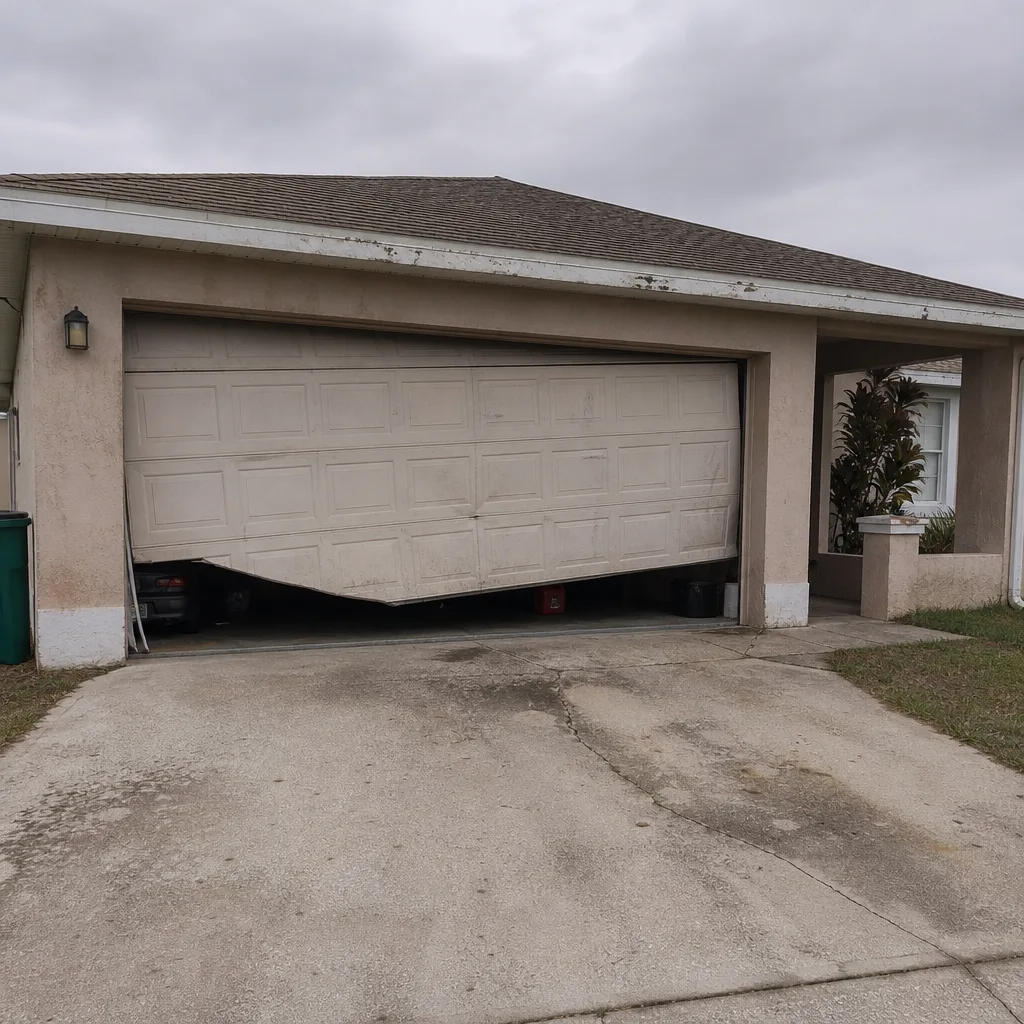 Before
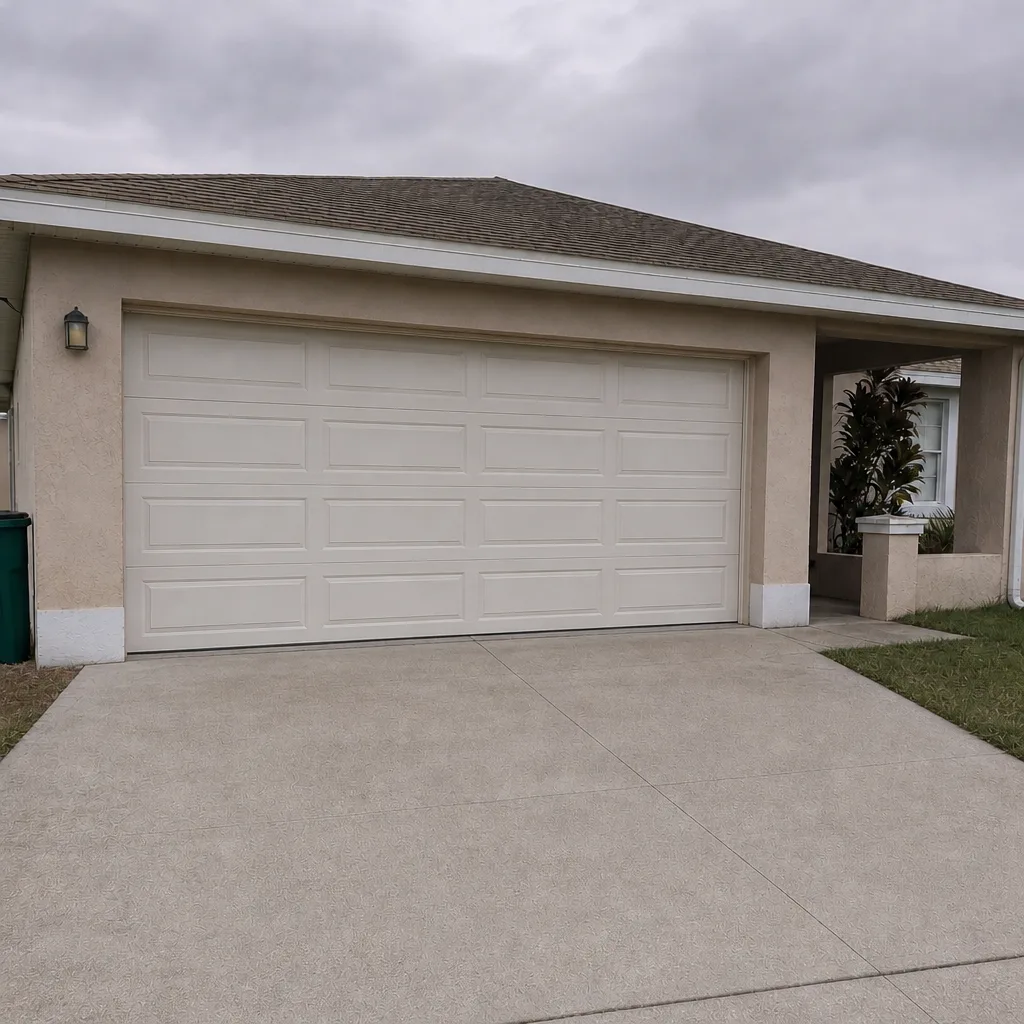 After
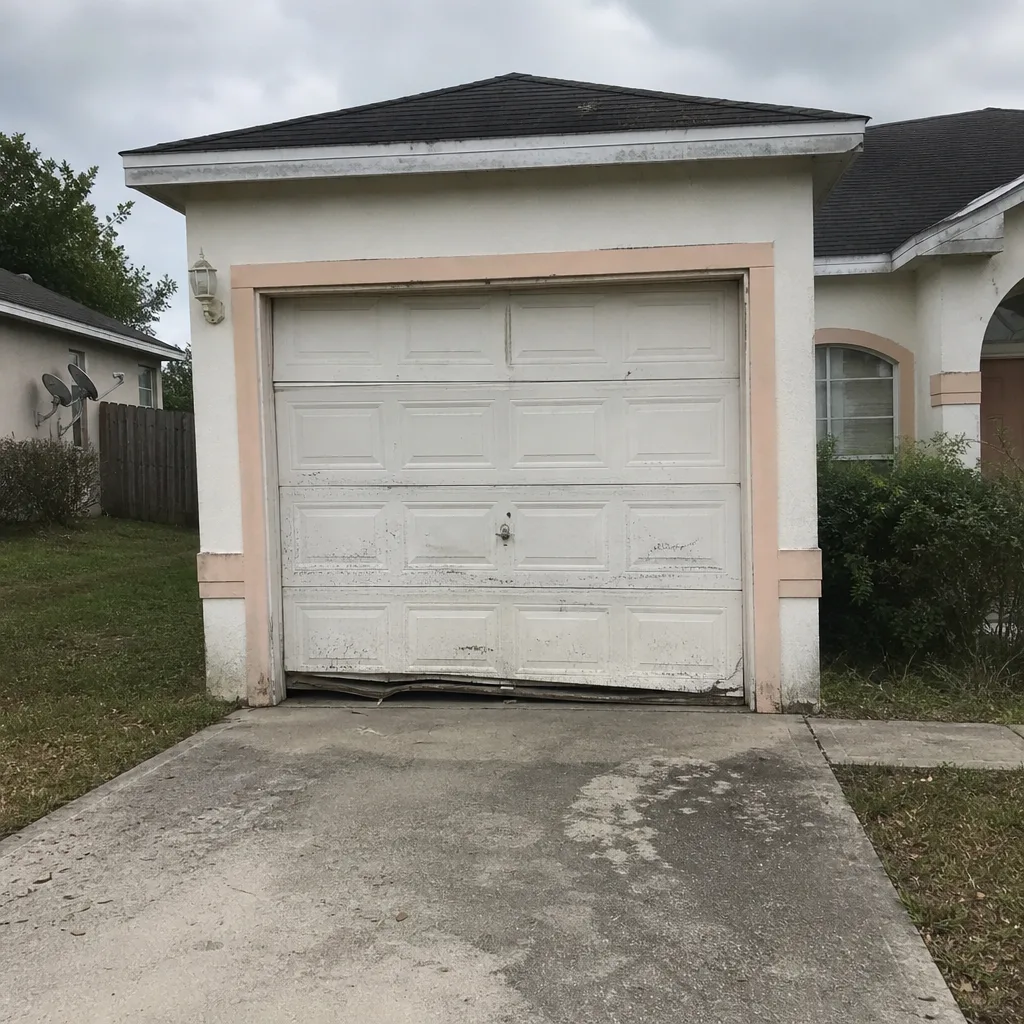 Before
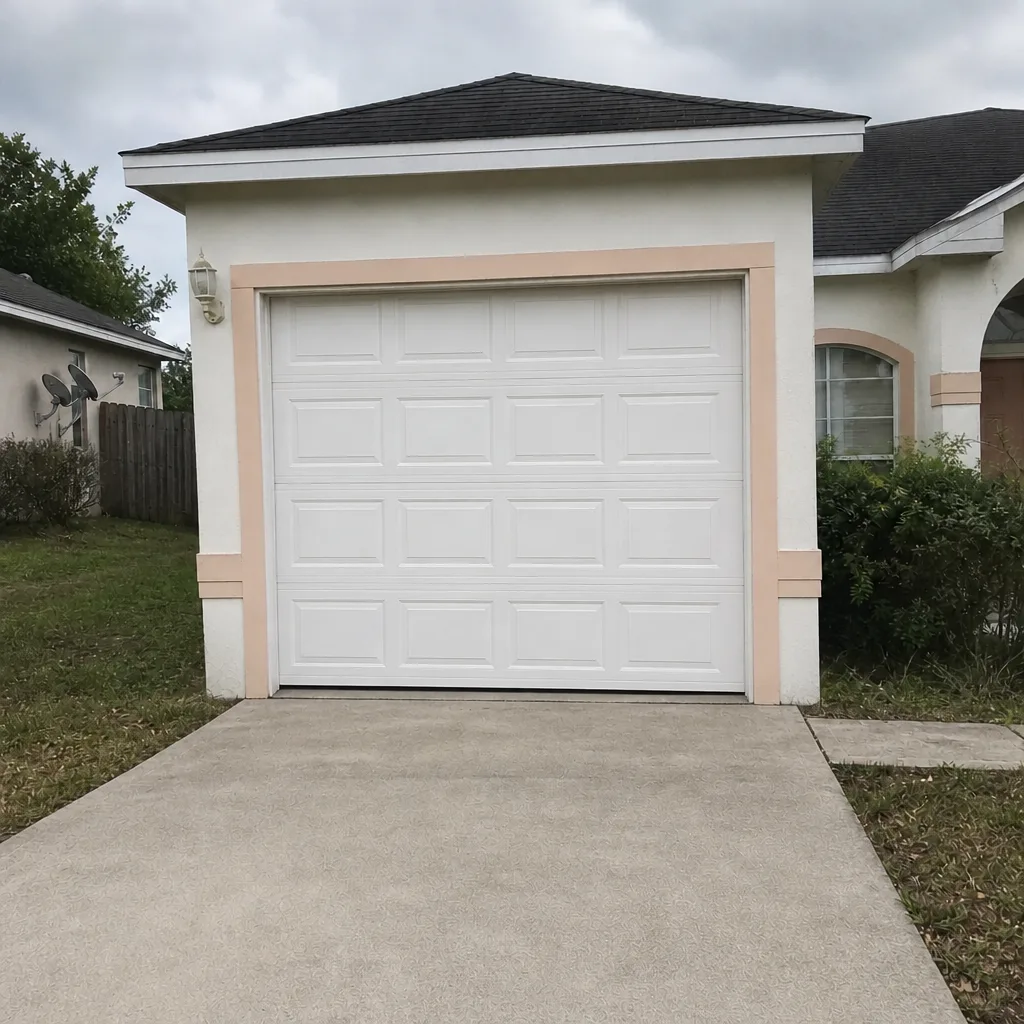 After
When to Call a Professional
Some garage door work is yours to do – visual inspection, changing a backup battery, replacing weatherstripping. Other work needs training. Springs and cables are the big one: the tension is stored energy that can seriously hurt you, and there’s no safe way to check or adjust them yourself. A door that comes off its track, an opener that won’t reverse, a manual release that’s seized, a post-storm inspection where the door doesn’t look right – all of those are professional visits, not DIY projects. The same goes for any time the door has become unpredictable: a door that runs unevenly, pops, reverses without reason, or feels heavy. If the door’s a LiftMaster, Chamberlain, Genie, Raynor or any of the other major brands, we work on it. Poinciana Garage Door Repair Pros offers free estimates in Poinciana – call (866) 890-9418. We answer 24/7, and with fast dispatch from 7am to 7pm, Sunday through Friday, we can get a diagnostic visit on the calendar quickly.
Frequently Asked Questions
Schedule the main inspection before June 1, ahead of hurricane season, and test the manual override every November. Between those two dates, do a quick visual check after any named storm before you operate the door. The pre-June inspection catches dry-season wear before the storms put it under stress, and it’s the single most useful appointment of the year. Call (866) 890-9418 for a free estimate on an inspection visit.
Yes. Weatherstripping dries out and hardens during Poinciana’s dry season, then softens and swells as humidity climbs ahead of hurricane season. The seal is your first defense against wind-driven rain, so a stiff or cracked one lets water into the garage. Inspecting the seal during the dry months and replacing it before June is the right timing.
Yes, every garage door has a manual release designed for that. Pull the release cord once to disengage the opener, then lift the door by hand. The catch is that the release mechanism itself can degrade during the dry season, so test it every November. If the release feels stiff or the door feels much heavier than it should, that’s a call for a trained technician – the door may be off balance.
Not until you’ve inspected it. Check the panels, both tracks, and the weatherstripping by eye first. If anything looks bent, separated or shifted, don’t press the opener button. If the door looks intact, try a careful manual lift before re-engaging the opener. If anything feels wrong, that’s when to call us – emergency garage door service is one of the things we do.
Heat and the daily afternoon temperature cycle affect torsion spring tension, and a door that’s already slightly out of balance can feel noticeably heavier in summer. This is a common heat-related symptom, especially on a door that’s been under load for a while. The right answer is a spring check by a trained technician – the door may just need the balance adjusted, or it may be showing the first sign of a spring that needs replacing. Call (866) 890-9418 and we can get it looked at.
In all likelihood, yes. We work on the most widely installed residential door and opener brands, including LiftMaster, Chamberlain, Genie, Clopay, Amarr, Wayne Dalton, Craftsman and Raynor. That means whether your door is an older mechanical setup or a modern smart opener, we can diagnose and repair it. For a brand you don’t see listed, call and ask – it’s a quick conversation and estimates are free. Our technicians have up to 15 years of experience.
The Bottom Line
Poinciana’s garage door care isn’t a four-season routine – it’s a three-phase routine timed to a dry season, a hurricane season, and the transition weeks on either side. The dry season is when small problems like stiffened weatherstripping and dried-out hinges develop, so that’s when to look. The pre-June 1 inspection is the most important appointment of the year, catching those dry-season problems before the storms. After any named storm, inspect before you press the button. And the November task – testing your manual override – is the one most likely to matter when you’re actually standing in a dark garage with a dead opener. Do those four things and you’re ahead of most doors in the neighborhood. When something does need a trained technician – springs, cables, tracks, openers, or a full replacement – we’re here.
Call (866) 890-9418 for a free estimate. We answer 24/7, and fast dispatch runs from 7am to 7pm, Sunday through Friday. Whether your door needs seasonal care, a garage door opener repair after a hot summer, or a new installation when the current door has reached the end of its life, the estimate is free and the price is quoted before any work starts. We’re Poinciana Garage Door Repair Pros, and we work on your brand.
Written by the team at Poinciana Garage Door Repair Pros.